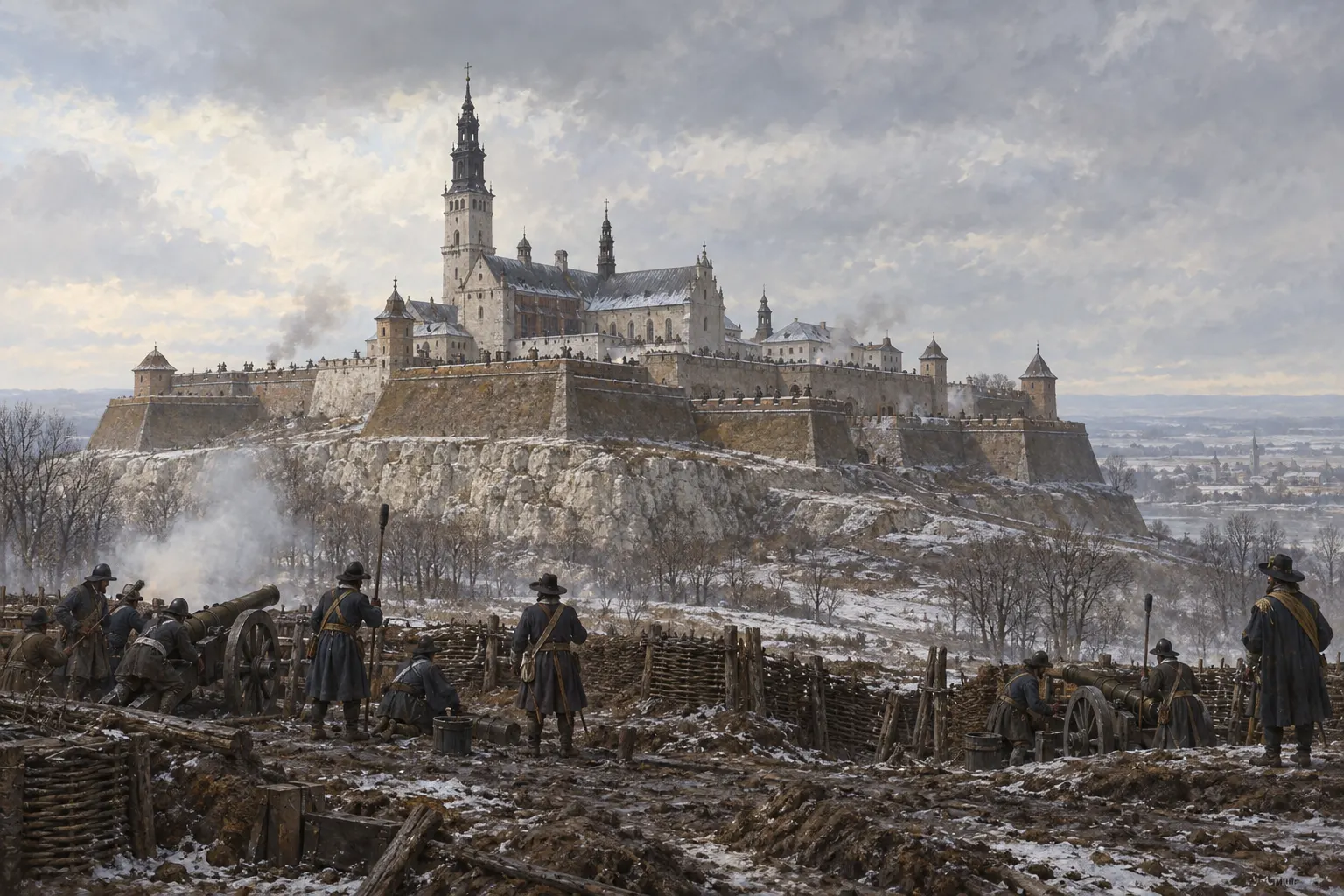
AI illustration
AI animation · Imagined siege of Jasna Góra; image and sound are illustrative.
Siege
Siege of Jasna Góra (1655)
18 XI 1655 – 27 XII 1655
DocumentedFor nearly six weeks the defenders of Jasna Góra refused to admit a Swedish garrison. Meet the decision makers, explore the fortress and learn why its defence became the defining image of the Deluge.
- Names and variants
- pl Oblężenie Jasnej Góry
- en Siege of Jasna Góra


The map shows the town or area of the event; it does not reconstruct troop positions.
The story in one minute
- When: the main besieging force arrived on 18 November 1655 and withdrew during the night of 26–27 December.1
- Who: Prior Augustyn Kordecki led the community's decisions and negotiations; General Burchard Müller commanded the besiegers. Piotr Czarniecki and Stefan Zamojski led sorties against gun batteries.23
- Why it held: fortifications and active defence bought time while weather, orders and resistance elsewhere pressed on the Swedish command.452
- Why it is remembered: defence of the shrine became a powerful symbol, amplified by Kordecki's later account, engravings, literature and film.24
Course of events
At the turn of October and November 1655 a delegation from the monastery made an act of submission, probably into the hands of Arvid Wittenberg2. According to the Museum of Polish History, Prior Augustyn Kordecki decided on 7 November to recognise the authority of Charles X Gustav6. Charles Gustav nevertheless ordered General Burchard Müller to occupy the monastery. Kubala stresses the valuables there as a possible way to pay the army; the National Museum in Warsaw instead stresses the aim of placing a Swedish garrison in a strategic fortress74.
The first to appear before the walls was Count Wrzeszczewicz, at ten o'clock at night on 8 November. He demanded that the gates be opened and threatened that four thousand soldiers would soon arrive89. The monks rejected his terms10. Kordecki had earlier taken the miraculous image away to Lubliniec in Silesia11, and the castellan of Kraków, Stanisław Warszycki, supplied the monastery with twelve guns12.
Müller's main force took up position at the foot of the hill on 18 November at about two in the afternoon. In a letter dated „8 (18) Listopada 1655” ("8 (18) November 1655") the general demanded that a garrison be admitted13. Bombardment alternated with negotiations. Müller demanded that 150 musketeers be let in and detained two monks sent to negotiate14. In sallies Piotr Czarniecki spiked two of the larger guns, and on 20 December Stefan Zamojski cut down the stonemasons who were hewing the rock beneath the walls and spiked two more guns3.
On Christmas Day the Swedes bombarded the monastery with heavy guns brought from Kraków15, and in the evening Müller, in a letter dated „15 (25) Grudnia” ("15 (25) December"), demanded surrender, or else an oath and a ransom of 60,000 thalers16. Kordecki replied on 26 December that the monastery had nothing to pay with17. In the night after St Stephen's Day the Swedes took their guns down from their positions, and at dawn they left; Müller marched off to Piotrków1819.
Why was a monastery also a fortress?
Jasna Góra was not merely a church complex behind a convenient wall. Beginning in 1620, on the orders of Sigismund III and later Władysław IV, it acquired small but modern bastioned defences. Four corner bastions were linked by ramparts and surrounded by a ditch. Its limestone hill made an approach harder and offered views across the surrounding land. The National Museum in Warsaw places the fortress at an important junction between Greater Poland, Silesia, Kraków and Warsaw54.
A bastion was more than a decorative tower. Its projecting shape allowed defenders to fire along the approach to the neighbouring stretch of wall; an earth-filled rampart absorbed blows better than a thin building wall. Jasna Góra was not invulnerable: heavier siege guns arriving in December increased the attackers' advantage. Its construction nevertheless explains why superior numbers alone could not secure a quick surrender45.
Who made decisions, and who fought?
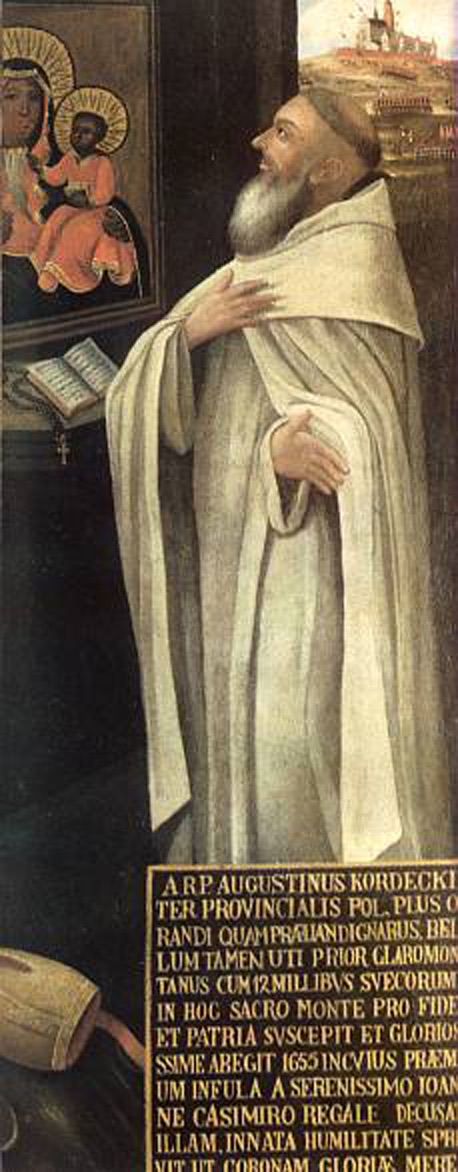
Augustyn Kordecki, the Pauline prior, led the community's decisions and its correspondence. Diplomacy mattered as much as guns: he wrote courteous letters to Swedish commanders and tried to gain time while declining to admit a foreign garrison. Historian Adam Kersten emphasises that Kordecki was not the fortress's military commander. His influence on negotiations and the decision to resist was nevertheless decisive2.
Burchard Müller von der Lühnen commanded the besieging corps. Before he arrived, Jan Wrzesowicz (Wrzeszczewicz), a commander in Swedish service, had already demanded entry. Inside the fortress, nobles and gunners also mattered. Kubala names Piotr Czarniecki and Stefan Zamojski as leaders of sorties against siege batteries. Stanisław Warszycki, castellan of Kraków, helped before the siege by sending twelve guns, according to Kordecki. Later memory concentrated the many defenders' work into the figure of the prior52812.
Preparations usually absent from paintings
The revered original icon of Our Lady of Częstochowa was taken to Lubliniec in Silesia before the siege. Popular scenes showing it above the defenders throughout the fighting express the event's religious meaning; they do not establish that the original panel remained there in November and December 165511.
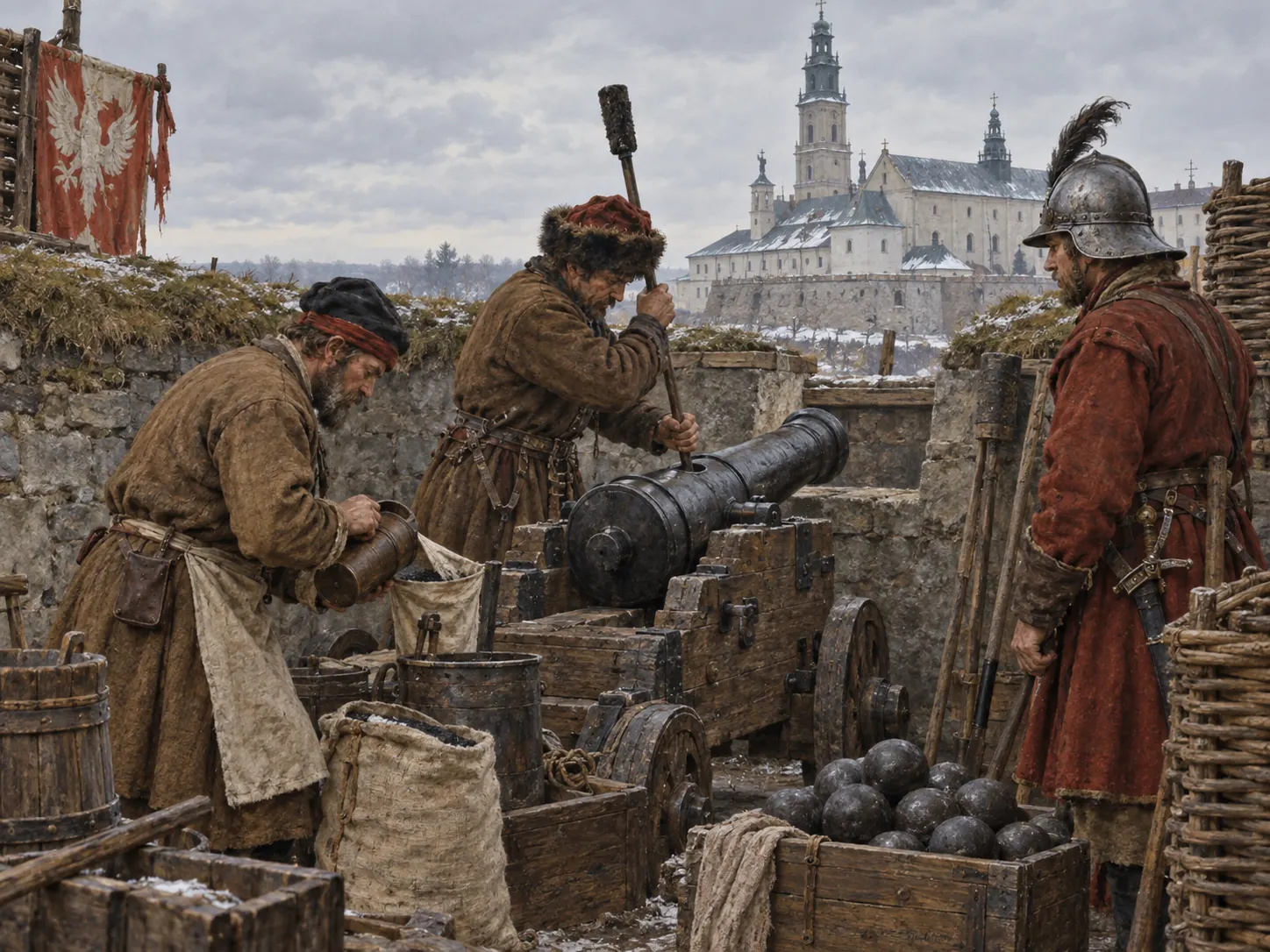
Less dramatic preparations included supplying a garrison, bringing in cannon, storing ammunition and securing the gates. The Polish Army Museum mentions around 50 gunners among the defenders. The bastions required crews to position guns, handle heavy barrels, replenish shot and powder and repair damage. The gun-crew illustration here represents the kind of work involved, not a documented instant or identified individuals54.
A struggle for time
At first Müller had chiefly lighter artillery. The Polish Army Museum estimates roughly 2,500 troops under him on 18 November, including 800 Poles in Swedish service. That detail matters: the siege line did not divide neatly into “Swedes” on one side and “Poles” on the other. The same account estimates that the besieging force grew to about 3,200 by late November. Heavier guns were brought from Kraków in December5.
Bombardment, interrupted talks and exchanged letters belonged to the same operation. The defenders did not merely wait behind their ramparts. A sortie was a short dash out of the fortress to disable a battery and return. Kubala describes men under Piotr Czarniecki and Stefan Zamojski spiking guns: driving metal into a gun's firing vent so it could not readily fire again. The museum dates one night attack on a battery to 14 December35.
What stands out?
Resistance after a safe-conduct. The monastery had sought a Swedish salva guardia, a pledge of protection, and had earlier acknowledged Charles X Gustav. Kersten explains the purpose: to keep Swedish troops out of the monastery itself. The apparent contradiction between an act of submission and armed resistance was part of a deliberate effort to retain control of the fortress24.
Money and military pressure. Near the end Müller demanded not only surrender but an enormous ransom, 60,000 thalers in a letter preserved in Kordecki's account. Failure at the walls, bad weather, widening resistance elsewhere and new orders from the Swedish king all contributed to the withdrawal. None alone supports a simple story of one battle deciding the war3052.
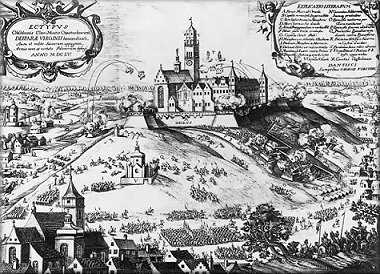
A battle over its own meaning. Soon after the siege, Johann Bensheimer engraved a view with letters and numbers identifying features of the scene. The National Museum notes that it combines fortress topography, troop positions and a religious vision of the defence. It shows how people represented the siege, not a neutral snapshot of the fighting4.
Forces and losses
Why did the siege become famous? Was it the most important event?
Militarily, the garrison defended a small but formidable fortress. It did not destroy Charles X Gustav's army or end the war. Politically and religiously, refusing to yield the Commonwealth's best-known shrine carried exceptional force. News spread as Swedish victories were beginning to look less irreversible. The Tyszowce Confederation cited the Częstochowa siege among its reasons for renouncing allegiance to Charles Gustav345.
Its renown was also actively shaped. At the court's urging, especially that of Queen Louise Marie, Kordecki's narrative was prepared; Nova Gigantomachia appeared in early 1658. Kersten shows that it changed the tone of some letters and softened the account of earlier talks with Sweden. Mickiewicz and Sienkiewicz later carried the story further. Calling the siege the “most important” episode makes sense for its symbolic power; it should not imply that one siege alone reversed the whole war2.
Significance
For Kubala it was a moral defeat for the Swedes, which undermined belief in their invincibility35. The siege of Częstochowa was among the reasons given in the act of the Tyszowce Confederation for renouncing allegiance to Charles Gustav34. Kubala linked the withdrawal with the outbreak of risings against the Swedes and with the departure of John II Casimir Vasa from Silesia on 18 December36; Kersten linked it with the growing rising and a change in Swedish plans2.
In the novel
Sienkiewicz gives the same figures as Kordecki:
Wiódł on ze sobą dziewięć tysięcy wojska, przeważnie piechoty, i dziewiętnaście dział.
Henryk Sienkiewicz, The Deluge (Potop)37
(Our translation: "He had with him nine thousand troops, mostly infantry, and nineteen guns.")
In the film
According to the description of the second part of the film in the filmpolski.pl database, Kmicic, as Babinicz, „Broni przed Szwedami klasztoru Jasnogórskiego.” ("Defends the Jasna Góra monastery against the Swedes.") Filming took place at Jasna Góra among other locations, and the culverin was made by the Zamech works in Elbląg39.
Notes
- Augustyn Kordecki; przeł. Józef Łepkowski, (Nowa Gigantomachia): pamiętnik oblężenia Częstochowy roku 1655, Warszawa: S. Orgelbrand, 1858, s. 28, 103
- Adam Kersten, Kordecki Klemens, imię zakonne Augustyn (1603–1673), Polski słownik biograficzny, t. 14, Wrocław: Zakład Narodowy im. Ossolińskich, 1968–1969, s. 53–55
- Ludwik Kubala, Wojna szwecka w roku 1655 i 1656, Szkice historyczne, serya IV (Biblioteka Historyczna Altenberga), Lwów; Warszawa: H. Altenberg, G. Seyfarth, E. Wende i Sp.; E. Wende i Sp., 1913, s. 162, 175
- Obrona Częstochowy w 1655 roku, Zbiory Cyfrowe, Warszawa: Muzeum Narodowe w Warszawie
- Oblężenie Jasnej Góry, Kalendarium – Dzieje Oręża Polskiego, Warszawa: Muzeum Wojska Polskiego w Warszawie
- Anna Łappo, Szwedzi odstępują od oblężenia Jasnej Góry, Warszawa: Muzeum Historii Polski w Warszawie
- Ludwik Kubala, Wojna szwecka w roku 1655 i 1656, Szkice historyczne, serya IV (Biblioteka Historyczna Altenberga), Lwów; Warszawa: H. Altenberg, G. Seyfarth, E. Wende i Sp.; E. Wende i Sp., 1913, s. 151, 155
- Ludwik Kubala, Wojna szwecka w roku 1655 i 1656, Szkice historyczne, serya IV (Biblioteka Historyczna Altenberga), Lwów; Warszawa: H. Altenberg, G. Seyfarth, E. Wende i Sp.; E. Wende i Sp., 1913, s. 155–156
- Augustyn Kordecki; przeł. Józef Łepkowski, (Nowa Gigantomachia): pamiętnik oblężenia Częstochowy roku 1655, Warszawa: S. Orgelbrand, 1858, s. 16–17
- Augustyn Kordecki; przeł. Józef Łepkowski, (Nowa Gigantomachia): pamiętnik oblężenia Częstochowy roku 1655, Warszawa: S. Orgelbrand, 1858, s. 20–22
- Ludwik Kubala, Wojna szwecka w roku 1655 i 1656, Szkice historyczne, serya IV (Biblioteka Historyczna Altenberga), Lwów; Warszawa: H. Altenberg, G. Seyfarth, E. Wende i Sp.; E. Wende i Sp., 1913, s. 153, 155–156
- Augustyn Kordecki; przeł. Józef Łepkowski, (Nowa Gigantomachia): pamiętnik oblężenia Częstochowy roku 1655, Warszawa: S. Orgelbrand, 1858, s. 26
- Augustyn Kordecki; przeł. Józef Łepkowski, (Nowa Gigantomachia): pamiętnik oblężenia Częstochowy roku 1655, Warszawa: S. Orgelbrand, 1858, s. 28–29
- Ludwik Kubala, Wojna szwecka w roku 1655 i 1656, Szkice historyczne, serya IV (Biblioteka Historyczna Altenberga), Lwów; Warszawa: H. Altenberg, G. Seyfarth, E. Wende i Sp.; E. Wende i Sp., 1913, s. 165–168
- Ludwik Kubala, Wojna szwecka w roku 1655 i 1656, Szkice historyczne, serya IV (Biblioteka Historyczna Altenberga), Lwów; Warszawa: H. Altenberg, G. Seyfarth, E. Wende i Sp.; E. Wende i Sp., 1913, s. 176, 178
- Augustyn Kordecki; przeł. Józef Łepkowski, (Nowa Gigantomachia): pamiętnik oblężenia Częstochowy roku 1655, Warszawa: S. Orgelbrand, 1858, s. 98–99
- Augustyn Kordecki; przeł. Józef Łepkowski, (Nowa Gigantomachia): pamiętnik oblężenia Częstochowy roku 1655, Warszawa: S. Orgelbrand, 1858, s. 100–102
- Augustyn Kordecki; przeł. Józef Łepkowski, (Nowa Gigantomachia): pamiętnik oblężenia Częstochowy roku 1655, Warszawa: S. Orgelbrand, 1858, s. 103
- Ludwik Kubala, Wojna szwecka w roku 1655 i 1656, Szkice historyczne, serya IV (Biblioteka Historyczna Altenberga), Lwów; Warszawa: H. Altenberg, G. Seyfarth, E. Wende i Sp.; E. Wende i Sp., 1913, s. 179
- Augustyn Kordecki; przeł. Józef Łepkowski, (Nowa Gigantomachia): pamiętnik oblężenia Częstochowy roku 1655, Warszawa: S. Orgelbrand, 1858, s. 28
- Ludwik Kubala, Wojna szwecka w roku 1655 i 1656, Szkice historyczne, serya IV (Biblioteka Historyczna Altenberga), Lwów; Warszawa: H. Altenberg, G. Seyfarth, E. Wende i Sp.; E. Wende i Sp., 1913, s. 159
- Narodowy Instytut Dziedzictwa, Częstochowa – Jasna Góra – zespół klasztoru oo. Paulinów, Zabytek.pl (Pomnik Historii), Warszawa: Narodowy Instytut Dziedzictwa
- Augustyn Kordecki, Nova gigantomachia contra sacram imaginem Deiparae Virginis a sancto Luca depictam, et in Monte Claro Częstochouiensi apud [...] patres Ordinis S. Pauli Eremitae in [...] Regni Poloniae coenobio collocatam per Suecos et alios haereticos excitata [...], Cracoviae: in officina viduae et heredum Francisci Caesarij, [1657]
- Augustyn Kordecki; przeł. Józef Łepkowski, (Nowa Gigantomachia): pamiętnik oblężenia Częstochowy roku 1655, Warszawa: S. Orgelbrand, 1858
- Adam Kersten, Pierwszy opis obrony Jasnej Góry w 1655 r.: studia nad Nową Gigantomachią ks. Augustyna Kordeckiego, Warszawa: Książka i Wiedza, 1959
- Adam Kersten, Szwedzi pod Jasną Górą 1655, Warszawa: Państwowe Wydawnictwo Naukowe, 1975
- Ludwik Kubala, Wojna szwecka w roku 1655 i 1656, Szkice historyczne, serya IV (Biblioteka Historyczna Altenberga), Lwów; Warszawa: H. Altenberg, G. Seyfarth, E. Wende i Sp.; E. Wende i Sp., 1913, s. 172, 182
- Ludwik Kubala, Wojna szwecka w roku 1655 i 1656, Szkice historyczne, serya IV (Biblioteka Historyczna Altenberga), Lwów; Warszawa: H. Altenberg, G. Seyfarth, E. Wende i Sp.; E. Wende i Sp., 1913, s. 155–156, 162, 175
- Augustyn Kordecki; przeł. Józef Łepkowski, (Nowa Gigantomachia): pamiętnik oblężenia Częstochowy roku 1655, Warszawa: S. Orgelbrand, 1858, s. 105
- Augustyn Kordecki; przeł. Józef Łepkowski, (Nowa Gigantomachia): pamiętnik oblężenia Częstochowy roku 1655, Warszawa: S. Orgelbrand, 1858, s. 98–103
- Augustyn Kordecki; przeł. Józef Łepkowski, (Nowa Gigantomachia): pamiętnik oblężenia Częstochowy roku 1655, Warszawa: S. Orgelbrand, 1858, s. 27
- Ludwik Kubala, Wojna szwecka w roku 1655 i 1656, Szkice historyczne, serya IV (Biblioteka Historyczna Altenberga), Lwów; Warszawa: H. Altenberg, G. Seyfarth, E. Wende i Sp.; E. Wende i Sp., 1913, s. 153, 180
- Ludwik Kubala, Wojna szwecka w roku 1655 i 1656, Szkice historyczne, serya IV (Biblioteka Historyczna Altenberga), Lwów; Warszawa: H. Altenberg, G. Seyfarth, E. Wende i Sp.; E. Wende i Sp., 1913, s. 162
- Ludwik Kubala, Wojna szwecka w roku 1655 i 1656, Szkice historyczne, serya IV (Biblioteka Historyczna Altenberga), Lwów; Warszawa: H. Altenberg, G. Seyfarth, E. Wende i Sp.; E. Wende i Sp., 1913, s. 262–263
- Ludwik Kubala, Wojna szwecka w roku 1655 i 1656, Szkice historyczne, serya IV (Biblioteka Historyczna Altenberga), Lwów; Warszawa: H. Altenberg, G. Seyfarth, E. Wende i Sp.; E. Wende i Sp., 1913, s. 182
- Ludwik Kubala, Wojna szwecka w roku 1655 i 1656, Szkice historyczne, serya IV (Biblioteka Historyczna Altenberga), Lwów; Warszawa: H. Altenberg, G. Seyfarth, E. Wende i Sp.; E. Wende i Sp., 1913, s. 180
- Henryk Sienkiewicz, Potop, Fundacja Nowoczesna Polska (Wolne Lektury), 2009–2010, t. II, rozdz. XIV
- Henryk Sienkiewicz, Potop, Fundacja Nowoczesna Polska (Wolne Lektury), 2009–2010, t. II, rozdz. XV
- Potop, Łódź: Państwowa Wyższa Szkoła Filmowa, Telewizyjna i Teatralna im. Leona Schillera w Łodzi (filmpolski.pl)
Explore further
History
Related
Characters
- Andrzej Kmicic jako Babinicz ostrzega klasztor i bierze udział w obronie (t. II, rozdz. XII–XIX) Inspired by a historical figure
- Father Kordecki przeor broniący klasztoru (t. II, rozdz. XII–XIX) Historical figure, fictionalized
Commanders
- Burchard Müller von der Lühnen dowódca korpusu oblegającego klasztor Historical figure
Depicted in
- Jasna Góra: history, novel, film
- The Deluge: the novel t. II, rozdz. XII–XIX Documented
Participants
- Augustyn Kordecki przeor klasztoru w czasie oblężenia Historical figure
- Jacek Brzuchański messenger described in the siege account Historical figure
- Jan Wejhard Wrzesowicz demanded the fortress's surrender on 8 November Historical figure
- Konstancja messenger described in the siege account Historical figure
- Piotr Czarniecki led a sortie against a siege battery Historical figure
- Stefan Zamojski led the sortie of 20 December Historical figure
Preceded
- Tyszowce Confederation (1655) Documented
Preceded by
- Siege of Kraków (1655) Documented
Related
- Adam Mickiewicz later memory of the siege Documented
- From resistance to counteroffensive siege Documented
- Ludwika Maria Gonzaga Historical figure
- Stanisław Warszycki sent material support to the defenders Historical figure
- Władysław IV Waza Historical figure
- Zygmunt III Waza Historical figure
- Charles X Gustav rozkazał Müllerowi zająć klasztor Historical figure
- Częstochowa
Location
Sources for this page
- Augustyn Kordecki; przeł. Józef Łepkowski, (Nowa Gigantomachia): pamiętnik oblężenia Częstochowy roku 1655, Warszawa: S. Orgelbrand, 1858 (Primary source)
- Adam Kersten, Kordecki Klemens, imię zakonne Augustyn (1603–1673), Polski słownik biograficzny, t. 14, Wrocław: Zakład Narodowy im. Ossolińskich, 1968–1969, s. 53–55 (Reference work)
- Ludwik Kubala, Wojna szwecka w roku 1655 i 1656, Szkice historyczne, serya IV (Biblioteka Historyczna Altenberga), Lwów; Warszawa: H. Altenberg, G. Seyfarth, E. Wende i Sp.; E. Wende i Sp., 1913 (Academic study)
- Obrona Częstochowy w 1655 roku, Zbiory Cyfrowe, Warszawa: Muzeum Narodowe w Warszawie (Institution)
- Oblężenie Jasnej Góry, Kalendarium – Dzieje Oręża Polskiego, Warszawa: Muzeum Wojska Polskiego w Warszawie (Institution)
- Anna Łappo, Szwedzi odstępują od oblężenia Jasnej Góry, Warszawa: Muzeum Historii Polski w Warszawie (Institution)
- Narodowy Instytut Dziedzictwa, Częstochowa – Jasna Góra – zespół klasztoru oo. Paulinów, Zabytek.pl (Pomnik Historii), Warszawa: Narodowy Instytut Dziedzictwa (Institution)
- Augustyn Kordecki, Nova gigantomachia contra sacram imaginem Deiparae Virginis a sancto Luca depictam, et in Monte Claro Częstochouiensi apud [...] patres Ordinis S. Pauli Eremitae in [...] Regni Poloniae coenobio collocatam per Suecos et alios haereticos excitata [...], Cracoviae: in officina viduae et heredum Francisci Caesarij, [1657] (Primary source)
- Adam Kersten, Pierwszy opis obrony Jasnej Góry w 1655 r.: studia nad Nową Gigantomachią ks. Augustyna Kordeckiego, Warszawa: Książka i Wiedza, 1959 (Academic study)
- Adam Kersten, Szwedzi pod Jasną Górą 1655, Warszawa: Państwowe Wydawnictwo Naukowe, 1975 (Academic study)
- Henryk Sienkiewicz, Potop, Fundacja Nowoczesna Polska (Wolne Lektury), 2009–2010 (Primary source)
- Potop, Łódź: Państwowa Wyższa Szkoła Filmowa, Telewizyjna i Teatralna im. Leona Schillera w Łodzi (filmpolski.pl) (Reference work)