
AI illustration
Imagined scene inspired by Justus van Egmont’s portrait; letters are illustrative.
Monarch
Ludwika Maria Gonzaga
b. 18 VIII 1611, d. 10 V 1667
Historical figureCommonwealth queen who supported resistance and diplomacy during the Deluge, encouraged the Jasna Góra account and helped shape the Peace of Oliva.
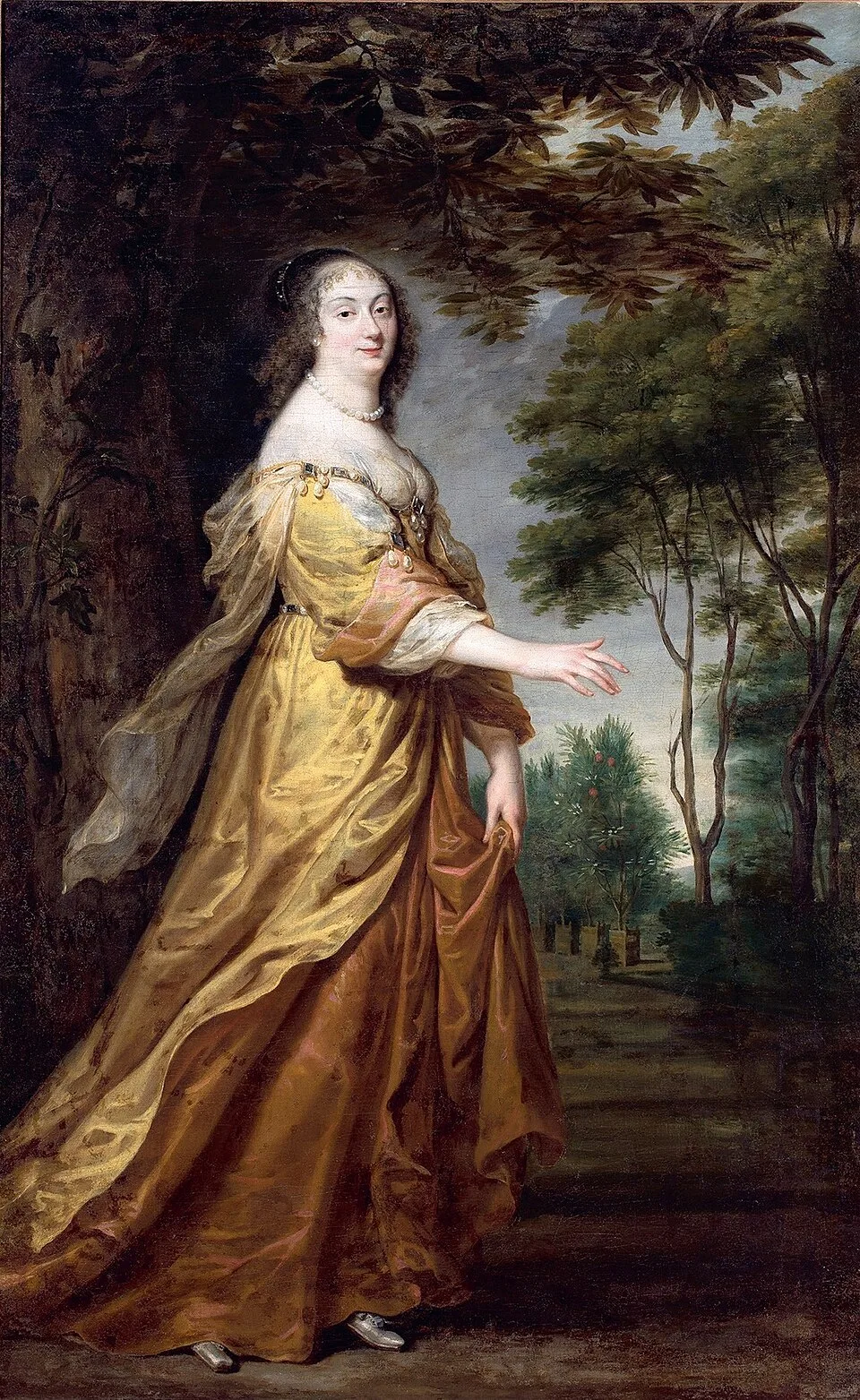
Painter: Justus van Egmont · 1645 · Muzeum Narodowe w Warszawie / Wikimedia Commons · Public domain
Queen to two Vasa kings
Ludwika Maria Gonzaga (1611–1667), also known as Marie Louise Gonzaga, came from France to marry Władysław IV. A proxy marriage took place in 1645. After his death she married his brother John II Casimir in 1649. The Wilanów Palace Museum describes her as an active and influential political figure in her own right1.
What did she do during the Deluge?
After leaving Warsaw she went to Silesia. According to the museum's biography, she spent her own money on the army, maintained contacts with opponents of Swedish occupation and sought aid from other European rulers. She also negotiated with the Elector of Brandenburg. Her contribution lay in funding, politics and diplomacy; she did not command the monastery's defenders1.
Jasna Góra and its later story
At the court's urging, especially the queen's, an account of the defence of Jasna Góra was prepared and later published under Augustyn Kordecki's name as Nova Gigantomachia. Historian Adam Kersten noted both its influence on the siege's reputation and its softened treatment of earlier talks with Sweden2. The queen helped shape how the siege was remembered.
Peace and reform
Ludwika Maria worked on the terms of the Peace of Oliva. Afterwards she pressed for stronger royal authority and an election of John Casimir's successor during his lifetime. These plans faced noble opposition and a political conflict with Jerzy Sebastian Lubomirski. She died on 10 May 1667, before her husband's abdication1.
The court as a political network
The queen also built political support by arranging marriages between her French ladies-in-waiting and Polish senators. Her wartime popularity declined when she pressed for constitutional reform and an election vivente rege, during the reigning monarch's lifetime1.
In the novel and film
The royal court forms part of the background to Kmicic's transformation and the resistance in Sienkiewicz's The Deluge. The novel, however, follows its protagonists rather than offering a full biography of the queen. No separate named role for Marie Louise has been verified in Hoffman's film cast; her historical political influence was broader than the screen story34.
Notes
- Wojciech Kalwat, Ludwika Maria Gonzaga – ambitna żona dwóch Wazów, Pasaż Wiedzy, Warszawa: Muzeum Pałacu Króla Jana III w Wilanowie, 2011
- Adam Kersten, Kordecki Klemens, imię zakonne Augustyn (1603–1673), Polski słownik biograficzny, t. 14, Wrocław: Zakład Narodowy im. Ossolińskich, 1968–1969, s. 53–55
- Henryk Sienkiewicz, Potop, Fundacja Nowoczesna Polska (Wolne Lektury), 2009–2010
- Potop, Łódź: Państwowa Wyższa Szkoła Filmowa, Telewizyjna i Teatralna im. Leona Schillera w Łodzi (filmpolski.pl)
Explore further
Related
Related
- Siege of Jasna Góra (1655) Documented
- Treaty of Oliva (1660) Documented
Sources for this page
- Wojciech Kalwat, Ludwika Maria Gonzaga – ambitna żona dwóch Wazów, Pasaż Wiedzy, Warszawa: Muzeum Pałacu Króla Jana III w Wilanowie, 2011 (Institution)
- Adam Kersten, Kordecki Klemens, imię zakonne Augustyn (1603–1673), Polski słownik biograficzny, t. 14, Wrocław: Zakład Narodowy im. Ossolińskich, 1968–1969, s. 53–55 (Reference work)
- Henryk Sienkiewicz, Potop, Fundacja Nowoczesna Polska (Wolne Lektury), 2009–2010 (Primary source)
- Potop, Łódź: Państwowa Wyższa Szkoła Filmowa, Telewizyjna i Teatralna im. Leona Schillera w Łodzi (filmpolski.pl) (Reference work)