
AI illustration
Imagined scene inspired by the biography and portrait shown below.
Monarch
Władysław IV Waza
Historical figureKing from 1632 to 1648, victor of the Smolensk War and patron of the defences that later protected Jasna Góra.
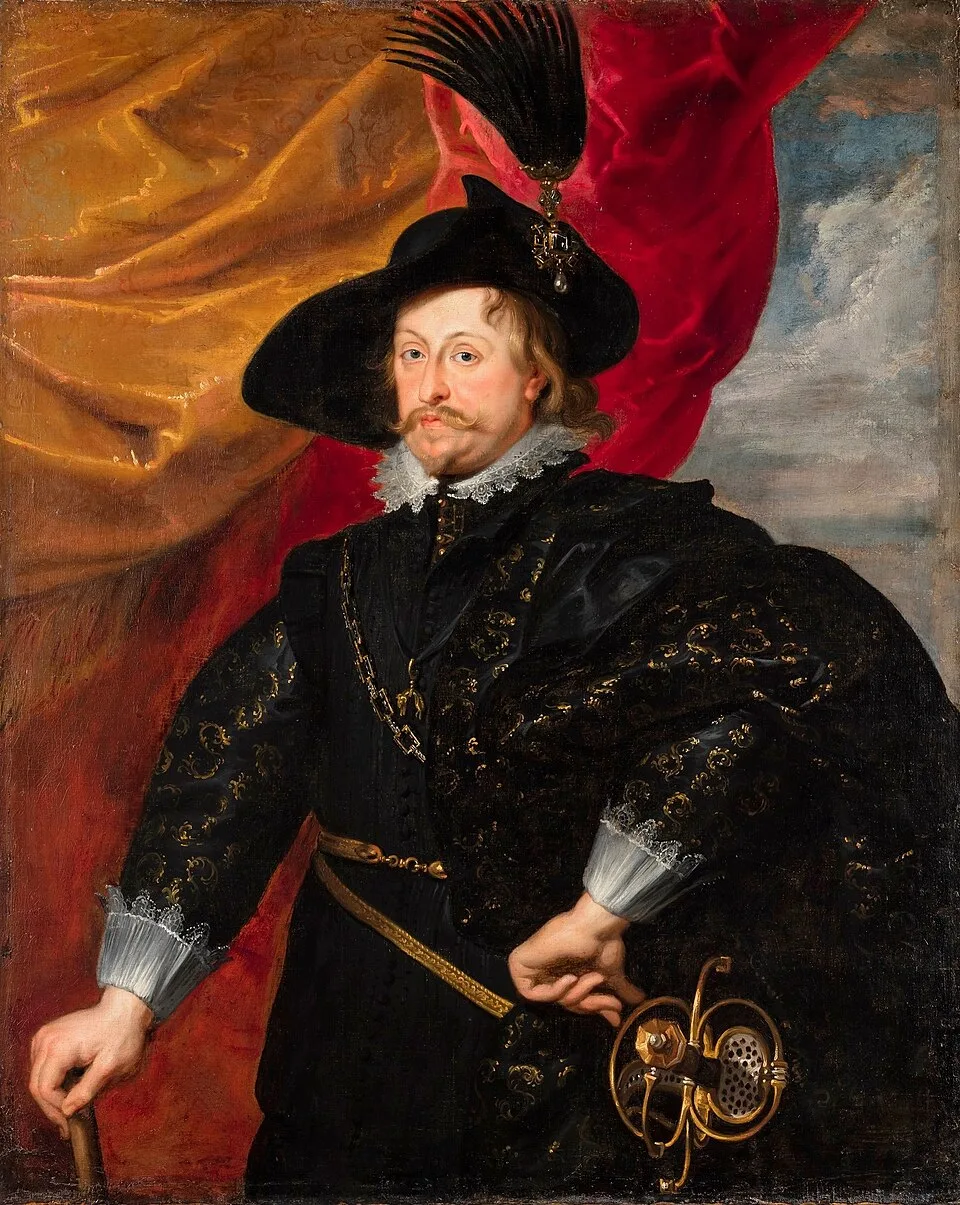
Painter: Peter Paul Rubens · 1620s · Wikimedia Commons · Public domain
Life and reign
Władysław IV, son of Sigismund III and Anne of Austria, was born in 1595. The Museum of Warsaw notes that he was the first elected king born in the Commonwealth. Chosen in 1632, he presided over a court centred on Warsaw. In February 1648 he granted town rights to Praga on the Vistula's eastern bank.1
Early in his reign he led the relief of Smolensk, then besieged by Muscovite forces. The enemy army's surrender in 1634 led to the Peace of Polyanovka. In return for compensation, Władysław renounced his claim to the Russian throne. This eastern war is an important part of the background to the later Deluge.2
The king also took an interest in theatre. Following a journey to Italy, he introduced performances of dramma per musica at his court. This cultural side of his reign is easy to miss in accounts focused solely on war.3
He died in 1648 as Bohdan Khmelnytsky's uprising began. His half-brother John II Casimir succeeded him and later faced the Swedish invasion.14
Jasna Góra and the Deluge
Under Władysław, work continued on the bastioned fortifications of Jasna Góra begun on his father's orders in 1620. The work lasted until 1644. It gave the monastery modern defences that complicated the Swedish siege of 1655. Władysław was already dead, but decisions taken under the two earlier Vasa kings shaped the defence.5
In the novel and film
Władysław IV cannot take part in the events of The Deluge: he died before its action begins. His reign forms part of the historical background to the Cossack uprising, the war with Moscow and John II Casimir's accession. His brother's actions and the film's siege scenes should not be attributed to him.467
Notes
- Władysław IV, Warszawa: Muzeum Warszawy
- Pokój wieczysty w Polanowie, Warszawa: Muzeum Wojska Polskiego w Warszawie
- Dramma per musica na dworze Władysława IV, Warszawa: Muzeum Pałacu Króla Jana III w Wilanowie
- Bitwa pod Korsuniem, Kalendarium – Dzieje Oręża Polskiego, Warszawa: Muzeum Wojska Polskiego w Warszawie
- Oblężenie Jasnej Góry, Kalendarium – Dzieje Oręża Polskiego, Warszawa: Muzeum Wojska Polskiego w Warszawie
- Henryk Sienkiewicz, Potop, Fundacja Nowoczesna Polska (Wolne Lektury), 2009–2010
- Potop, Łódź: Państwowa Wyższa Szkoła Filmowa, Telewizyjna i Teatralna im. Leona Schillera w Łodzi (filmpolski.pl)
Explore further
History
Related
Related
- Siege of Jasna Góra (1655) Documented
Sources for this page
- Władysław IV, Warszawa: Muzeum Warszawy (Institution)
- Pokój wieczysty w Polanowie, Warszawa: Muzeum Wojska Polskiego w Warszawie (Institution)
- Dramma per musica na dworze Władysława IV, Warszawa: Muzeum Pałacu Króla Jana III w Wilanowie (Institution)
- Bitwa pod Korsuniem, Kalendarium – Dzieje Oręża Polskiego, Warszawa: Muzeum Wojska Polskiego w Warszawie (Institution)
- Oblężenie Jasnej Góry, Kalendarium – Dzieje Oręża Polskiego, Warszawa: Muzeum Wojska Polskiego w Warszawie (Institution)
- Henryk Sienkiewicz, Potop, Fundacja Nowoczesna Polska (Wolne Lektury), 2009–2010 (Primary source)
- Potop, Łódź: Państwowa Wyższa Szkoła Filmowa, Telewizyjna i Teatralna im. Leona Schillera w Łodzi (filmpolski.pl) (Reference work)