
AI illustration
Imagined period town; smoke is an animation effect.
City
Częstochowa
The town on the Warta, Częstochówka, and Jasna Góra had distinct histories. The monastery's defence in 1655 brought the sanctuary fame, while local people faced plunder, fires, and a long recovery.
The town on the Warta
Częstochowa first appears in a document from 1220. The settlement developed beside a crossing of the Warta and the route from Kraków through Olkusz and Kalisz to Poznań. Trade, crafts, and market privileges shaped its economy; residents also practised agriculture, gardening, and animal husbandry1.
Częstochowa, Częstochówka, and Jasna Góra
In 1382 Władysław Opolczyk founded the Pauline monastery on the hill. The town beside the Warta and the settlement of Częstochówka near the monastery developed alongside one another, benefiting from commerce and pilgrimage1.
That distinction mattered during the war. When General Burchard Müller presented an order to garrison Częstochowa, Augustyn Kordecki replied on 21 November 1655 that the monastery and church were called Jasna Góra, while the town of Częstochowa did not belong to the monastery. Kubala presents this argument as part of the negotiations: naming the town did not automatically authorize the enemy to enter the fortress. The modern city's shared name and boundaries can obscure these earlier distinctions2.
The sanctuary was also a fortress
According to Poland's National Heritage Board, work on the defences began in 1624 under Sigismund III. Jasna Góra acquired a circuit with four bastions, and in 1652 the Sejm required the Paulines to maintain a permanent garrison. In November 1655 the besiegers therefore faced a fortified complex prepared for defence3.
The siege of Jasna Góra page explains the fighting, negotiations, and garrison's sorties. This article focuses on the town and its surroundings: the roads, buildings, and people caught between the fortress and the enemy camp.
A village and granary in the fighting
Müller occupied Częstochówka and began establishing positions suitable for an attack. Kubala describes the defenders burning the village's buildings at night, especially a granary that could supply the besiegers with food and shelter. He also records demands sent around the surrounding area for provisions to be brought to the camp. The monastery's economic resources and local people consequently bore part of the cost of military operations4.
Kordecki describes the movement of larger guns to the monastery's northern side, towards Częstochowa, and firing from cover among buildings. Houses and farms became part of the battlefield, rather than simply its backdrop5.
The people who carried messages
Kubala's account introduces a Częstochowa burgher, Jacek Brzuchański. In December he reached the defenders disguised as a Swedish soldier, bringing news of approaching heavy guns and a letter from the Kraków convent. On another attempt, disguised as a soldier of the Commonwealth's standing army, he delivered a warning about preparations for an assault. He was captured and sentenced to hang; the death sentence was subsequently commuted to a ransom6.
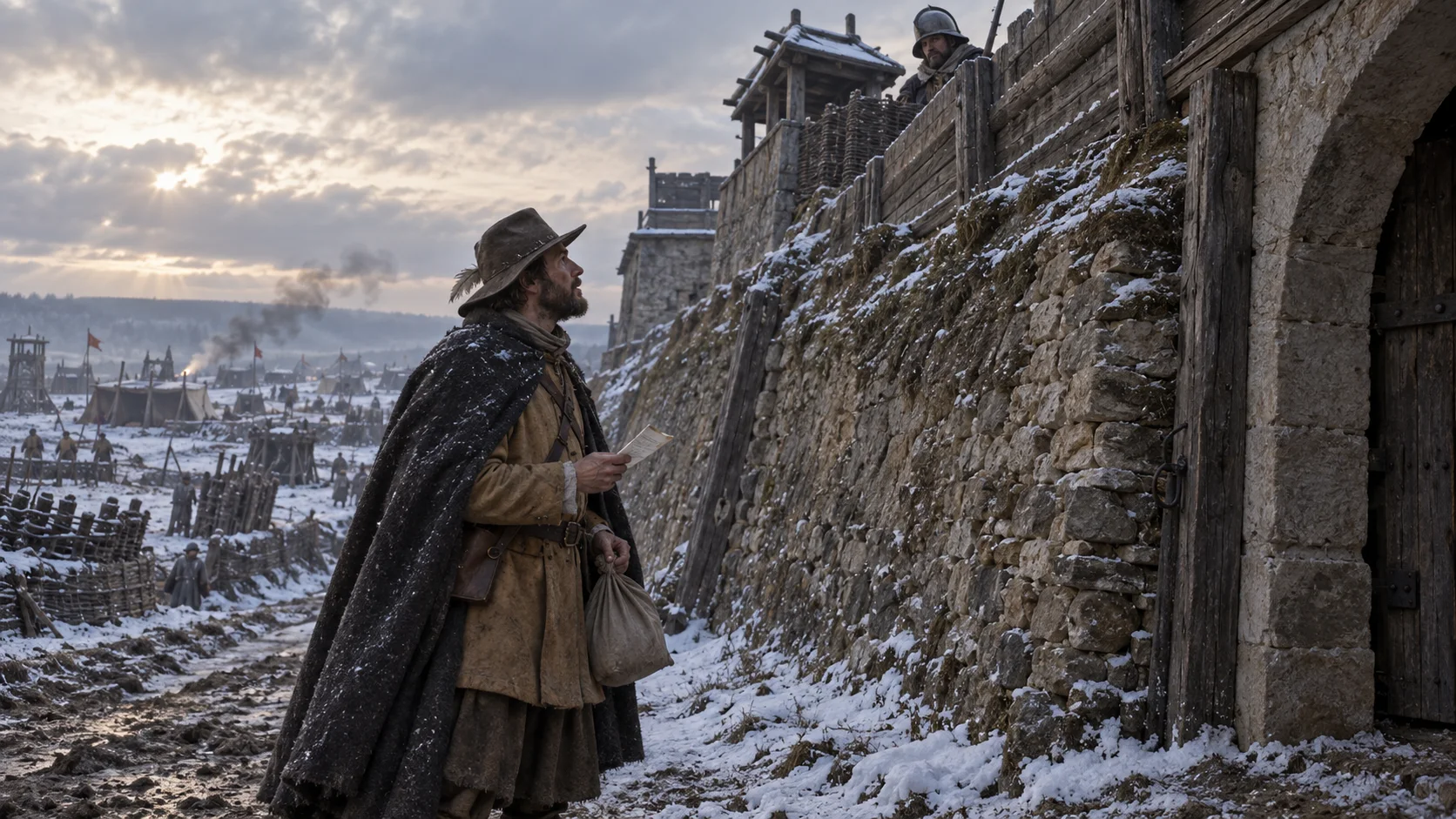
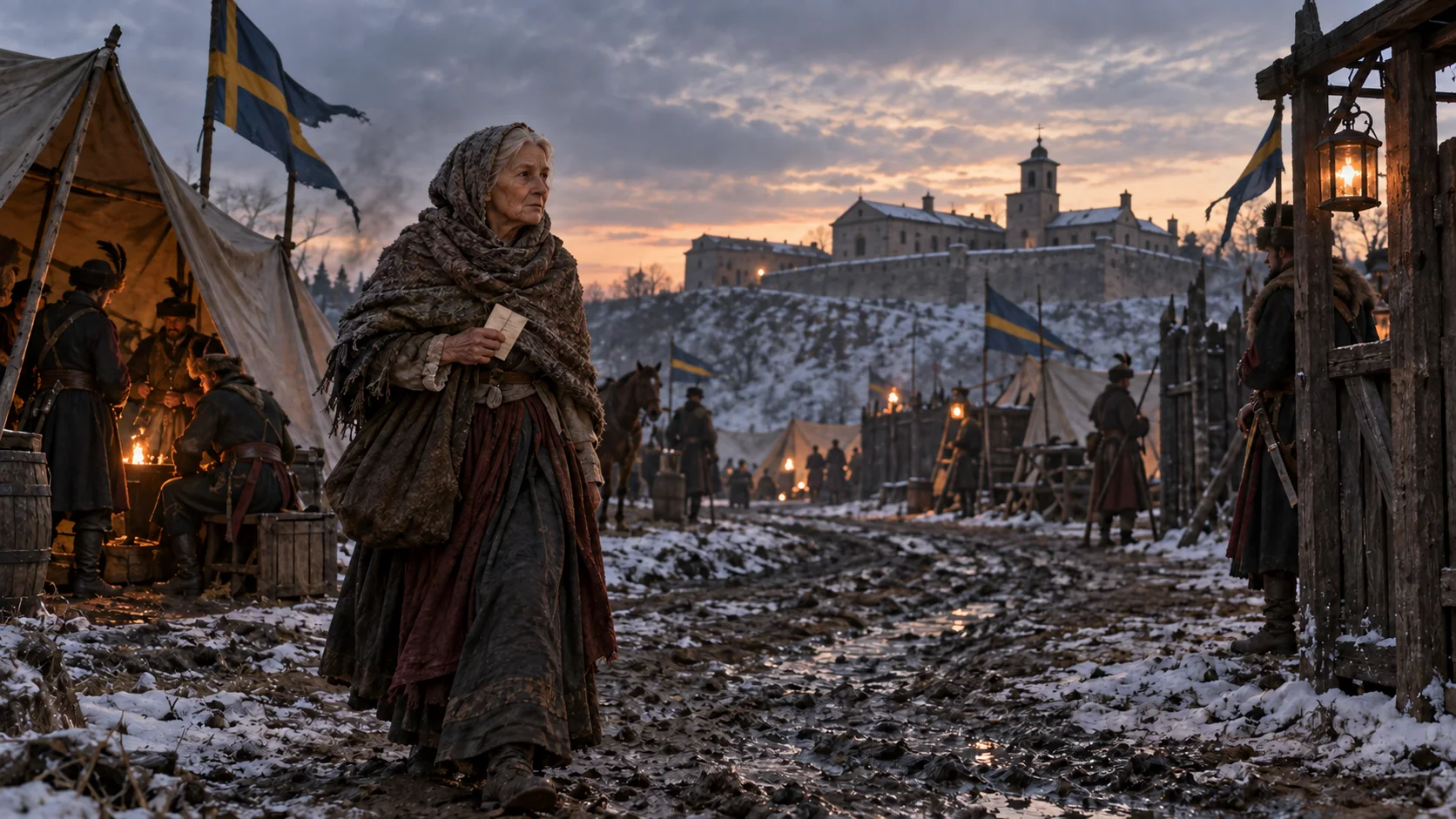
Kubala also mentions Konstancja, a beggar living in a crevice beside the ramparts. When nobody wanted to carry the prior's reply to Müller before Christmas, she was entrusted with it. In Kubala’s account, people outside the military garrison also carried messages during the siege7.
A defended monastery and a devastated town
The municipal timeline “800 Years of Częstochowa” reports 150 houses in the 1660 inspection, compared with 378 in 1631, and 51 craftsmen, compared with 125 in 1620. These comparisons illustrate the town's weakened postwar condition, although the interval extends beyond the siege itself. Counts of houses and craftsmen are neither casualty totals nor a census of every resident8.
Kordecki's account likewise closes with a devastated hinterland: the monks found burnt remains of farms and villages, and encountered hardly any of their dependants. This records the monastery community's experience, rather than an exact assessment of losses throughout Częstochowa9.
St Sigismund's Church: another centre of history
The church beside the Old Market recalls the history of the town on the Warta. Its parish passed to the Paulines in 1474, and they built a monastery beside it. The church was still being enlarged before the Deluge: St Anne's Chapel was added in 1642, and a sacristy in 1640–1647. The Częstochowa Museum describes the church's plundering and burning during the invasion of 1655. The town's relationship with the Paulines therefore extended beyond Jasna Góra itself10.
What archaeology reveals about the old market
Remains of the former town hall's cellars survive beneath the Old Market and are displayed in a museum pavilion. Excavations also revealed the town weighing facility, wells, and remains of stalls. According to the museum, inspection records from 1564 and 1660 confirm masonry cellars where Wrocław beer was among the drinks sold. The hall's precise construction date remains uncertain. It burned down in 1809 and was not rebuilt; the exhibition reveals underground fragments of the town's everyday life11.
Why today's avenue is not the landscape of 1655
The settlement near the monastery was known as New Częstochowa from 1717. Its formal union with Old Częstochowa took place on 19 August 1826. Panny Maryi Street, today's Najświętszej Maryi Panny Avenue, connected St Sigismund's Church with Jasna Góra and became the axis of the new centre. Walking this route now connects the former settlements, but its urban form belongs to nineteenth-century history12.
The oldest surviving houses beside the Old Market date from the late eighteenth century, and later rebuilding changed the district's appearance13. Jasna Góra was also enlarged after 1655: Baroque alterations and work in the early twentieth century helped shape what we see today. Our Częstochowa map marker identifies the city; the monastery has its own entry3.
Częstochowa as a film location
The filmpolski.pl database lists Częstochowa and Jasna Góra among the locations for Jerzy Hoffman's film. This concerns the production of 1973–1974. Our comparison of history, novel, and film examines differences between historical testimony and the literary and screen narratives14.
Notes
- Historia miasta, Częstochowa: Urząd Miasta Częstochowy
- Ludwik Kubala, Wojna szwecka w roku 1655 i 1656, Szkice historyczne, serya IV (Biblioteka Historyczna Altenberga), Lwów; Warszawa: H. Altenberg, G. Seyfarth, E. Wende i Sp.; E. Wende i Sp., 1913, pp. 160–161
- Narodowy Instytut Dziedzictwa, Częstochowa – Jasna Góra – zespół klasztoru oo. Paulinów, Zabytek.pl (Pomnik Historii), Warszawa: Narodowy Instytut Dziedzictwa
- Ludwik Kubala, Wojna szwecka w roku 1655 i 1656, Szkice historyczne, serya IV (Biblioteka Historyczna Altenberga), Lwów; Warszawa: H. Altenberg, G. Seyfarth, E. Wende i Sp.; E. Wende i Sp., 1913, pp. 159–160
- Augustyn Kordecki; przeł. Józef Łepkowski, (Nowa Gigantomachia): pamiętnik oblężenia Częstochowy roku 1655, Warszawa: S. Orgelbrand, 1858, pp. 30–31
- Ludwik Kubala, Wojna szwecka w roku 1655 i 1656, Szkice historyczne, serya IV (Biblioteka Historyczna Altenberga), Lwów; Warszawa: H. Altenberg, G. Seyfarth, E. Wende i Sp.; E. Wende i Sp., 1913, pp. 170, 176
- Ludwik Kubala, Wojna szwecka w roku 1655 i 1656, Szkice historyczne, serya IV (Biblioteka Historyczna Altenberga), Lwów; Warszawa: H. Altenberg, G. Seyfarth, E. Wende i Sp.; E. Wende i Sp., 1913, pp. 176–177
- 800 lat Częstochowy – kalendarium historyczne, Częstochowa: Urząd Miasta Częstochowy, entry “Upadek miasta”
- Augustyn Kordecki; przeł. Józef Łepkowski, (Nowa Gigantomachia): pamiętnik oblężenia Częstochowy roku 1655, Warszawa: S. Orgelbrand, 1858, p. 103
- H. Kościół św. Zygmunta, Stary Rynek – interaktywna ikonografia, Częstochowa: Muzeum Częstochowskie
- Magdalena Wieczorek-Szmal, Historia Częstochowy – miasta nad Wartą, Częstochowa: Muzeum Częstochowskie
- Encyklopedia Częstochowy, Częstochowa: Muzeum Częstochowskie, 2020, entry “Połączenie Starej i Nowej Częstochowy”
- Encyklopedia Częstochowy, Częstochowa: Muzeum Częstochowskie, 2020, entry “Stare Miasto”
- Potop, Łódź: Państwowa Wyższa Szkoła Filmowa, Telewizyjna i Teatralna im. Leona Schillera w Łodzi (filmpolski.pl)
Explore further
Related
Related
- Jasna Góra
- Siege of Jasna Góra (1655) Documented
- Jacek Brzuchański Historical figure
- Konstancja Historical figure
Sources for this page
- Historia miasta, Częstochowa: Urząd Miasta Częstochowy (Institution)
- Ludwik Kubala, Wojna szwecka w roku 1655 i 1656, Szkice historyczne, serya IV (Biblioteka Historyczna Altenberga), Lwów; Warszawa: H. Altenberg, G. Seyfarth, E. Wende i Sp.; E. Wende i Sp., 1913 (Academic study)
- Narodowy Instytut Dziedzictwa, Częstochowa – Jasna Góra – zespół klasztoru oo. Paulinów, Zabytek.pl (Pomnik Historii), Warszawa: Narodowy Instytut Dziedzictwa (Institution)
- Augustyn Kordecki; przeł. Józef Łepkowski, (Nowa Gigantomachia): pamiętnik oblężenia Częstochowy roku 1655, Warszawa: S. Orgelbrand, 1858 (Primary source)
- 800 lat Częstochowy – kalendarium historyczne, Częstochowa: Urząd Miasta Częstochowy (Institution)
- H. Kościół św. Zygmunta, Stary Rynek – interaktywna ikonografia, Częstochowa: Muzeum Częstochowskie (Institution)
- Magdalena Wieczorek-Szmal, Historia Częstochowy – miasta nad Wartą, Częstochowa: Muzeum Częstochowskie (Institution)
- Encyklopedia Częstochowy, Częstochowa: Muzeum Częstochowskie, 2020 (Reference work)
- Potop, Łódź: Państwowa Wyższa Szkoła Filmowa, Telewizyjna i Teatralna im. Leona Schillera w Łodzi (filmpolski.pl) (Reference work)