
AI illustration
Imagined period town; smoke is an animation effect.
City
Kėdainiai
A town in Samogitia (Polish Kiejdany), a seat of the Radziwiłłs, where in 1655 the act placing Lithuania under Swedish protection was proclaimed.
- Names and variants
- pl Kiejdany
A town on the Nevėžis
Kiejdany developed on both banks of the Nevėžis, on the boundary between Samogitia and Aukštaitija. Its history as a privately owned town is associated with the Kiszka and Radziwiłł families. The regional museum describes a diverse population: Catholics lived alongside Calvinists, Lutherans, Arians and Jews. Terrain and the owners’ initiatives shaped its districts. Scholars and writers of Lithuanian also worked here. The agreement of 1655 was therefore concluded in an established magnate and religious centre1.
During the Deluge
Near Kėdainiai on 18 August 1655 the Grand Hetman of Lithuania, Janusz Radziwiłł, proclaimed, in the presence of Bengt Skytte, the act submitting Lithuania to the King of Sweden2 (Capitulation of Kėdainiai (1655)). Radziwiłł later summoned the Lithuanian estates to Kėdainiai. There he gave a ceremonial reception to Magnus Gabriel de la Gardie, and there the second act of submission was signed3, according to the Museum of Polish History on 20 October 16554. At the banquet given on that occasion, during Korff's oration, the floor gave way under the crowd of listeners, which the Lithuanians took as a bad omen3.
The hetman conducted his correspondence from Kėdainiai. At the end of August 1655 he wrote letters from here to Prince Bogusław urging him to deal with their opponents5. He also had news-sheets printed at Kėdainiai under the names of printers from Gdańsk, Königsberg and Riga6. At Kėdainiai on 21 October the imprisoned field hetman Wincenty Gosiewski signed an undertaking to de la Gardie that he would not flee from his camp7.
In The Deluge (Potop) the heroes come to Kėdainiai at the hetman's summons, and the act of submission is read out here by Mr Komorowski8.
Today
In Kėdainiai stands the Evangelical Reformed church which Krzysztof II Radziwiłł began building in 1629 and his son Janusz completed in 1652. According to the museum in Kėdainiai, the church has kept its original form almost unchanged. In Soviet times it served as a grain store and later as a sports school; it was restored in 1986–19919. Today the church and the Radziwiłł mausoleum are a branch of the regional museum (Kėdainių krašto muziejus). The mausoleum holds the sarcophagi of six Radziwiłłs, among them Janusz (1612–1655)9.
A school and press before the Deluge
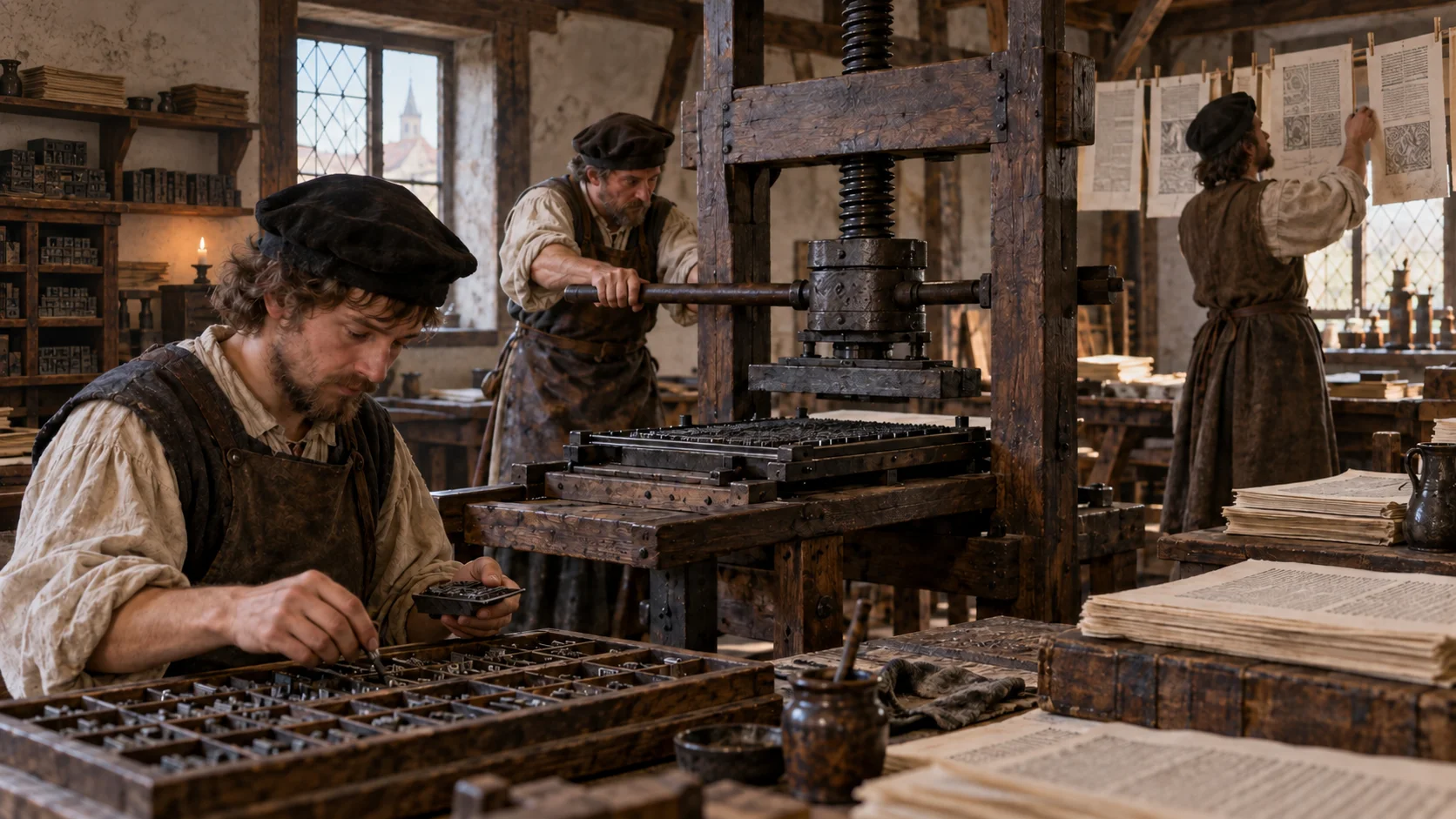
Krzysztof II Radziwiłł founded a Reformed school in 1625; it became a gymnasium in 1647. In 1653 Joachim Georg Rhete, arriving from Gdańsk, printed the Lithuanian religious collection “Knyga nobažnystės krikščioniškos”. These institutions reveal a centre of Protestant education and culture immediately before the war. The Radziwiłł palace did not survive later conflicts: the municipal chronology attributes its destruction to Charles XII’s forces in 1704, during a different war from the Deluge11.
Synagogues and a shared heritage
The Multicultural Centre occupies a restored small winter synagogue built in 1837–1857. Established in 2002, it presents local Jewish history and the Holocaust. A larger summer synagogue also survives nearby, while other parts of the ensemble disappeared during the war and Soviet period. These buildings postdate the Kiejdany agreement. They illuminate the later history of a town of many faiths, but were not present during the negotiations of 165512.
Notes
- Kėdainių istorija, Kėdainių krašto muziejus
- Ludwik Kubala, Wojna szwecka w roku 1655 i 1656, Szkice historyczne, serya IV (Biblioteka Historyczna Altenberga), Lwów; Warszawa: H. Altenberg, G. Seyfarth, E. Wende i Sp.; E. Wende i Sp., 1913, s. 87
- Ludwik Kubala, Wojna szwecka w roku 1655 i 1656, Szkice historyczne, serya IV (Biblioteka Historyczna Altenberga), Lwów; Warszawa: H. Altenberg, G. Seyfarth, E. Wende i Sp.; E. Wende i Sp., 1913, s. 90
- Układ w Kiejdanach, Kalendarium, Warszawa: Muzeum Historii Polski w Warszawie
- Ludwik Kubala, Wojna szwecka w roku 1655 i 1656, Szkice historyczne, serya IV (Biblioteka Historyczna Altenberga), Lwów; Warszawa: H. Altenberg, G. Seyfarth, E. Wende i Sp.; E. Wende i Sp., 1913, s. 91–92, 396
- Ludwik Kubala, Wojna szwecka w roku 1655 i 1656, Szkice historyczne, serya IV (Biblioteka Historyczna Altenberga), Lwów; Warszawa: H. Altenberg, G. Seyfarth, E. Wende i Sp.; E. Wende i Sp., 1913, s. 92
- Ludwik Kubala, Wojna szwecka w roku 1655 i 1656, Szkice historyczne, serya IV (Biblioteka Historyczna Altenberga), Lwów; Warszawa: H. Altenberg, G. Seyfarth, E. Wende i Sp.; E. Wende i Sp., 1913, s. 396
- Henryk Sienkiewicz, Potop, Fundacja Nowoczesna Polska (Wolne Lektury), 2009–2010, t. I, rozdz. XII–XIII
- Kunigaikščių Radvilų mauzoliejus evangelikų reformatų bažnyčioje, Kėdainiai: Kėdainių krašto muziejus
- Ludwik Kubala, Wojna szwecka w roku 1655 i 1656, Szkice historyczne, serya IV (Biblioteka Historyczna Altenberga), Lwów; Warszawa: H. Altenberg, G. Seyfarth, E. Wende i Sp.; E. Wende i Sp., 1913, s. 93
- Istorinės datos, Kėdainių rajono savivaldybė
- Multicultural Centre, Kėdainių krašto muziejus
Explore further
Related
Events here
- Capitulation of Kėdainiai (1655) Documented
Sources for this page
- Kėdainių istorija, Kėdainių krašto muziejus (Institution)
- Ludwik Kubala, Wojna szwecka w roku 1655 i 1656, Szkice historyczne, serya IV (Biblioteka Historyczna Altenberga), Lwów; Warszawa: H. Altenberg, G. Seyfarth, E. Wende i Sp.; E. Wende i Sp., 1913 (Academic study)
- Układ w Kiejdanach, Kalendarium, Warszawa: Muzeum Historii Polski w Warszawie (Institution)
- Henryk Sienkiewicz, Potop, Fundacja Nowoczesna Polska (Wolne Lektury), 2009–2010 (Primary source)
- Kunigaikščių Radvilų mauzoliejus evangelikų reformatų bažnyčioje, Kėdainiai: Kėdainių krašto muziejus (Institution)
- Istorinės datos, Kėdainių rajono savivaldybė (Institution)
- Multicultural Centre, Kėdainių krašto muziejus (Institution)