
AI illustration
Imagined scene inspired by the biography and portrait shown below.
Commander
Magnus Gabriel de la Gardie
Historical figureSwedish statesman and commander in Livonia who later led his country's delegation to the Oliva peace talks.
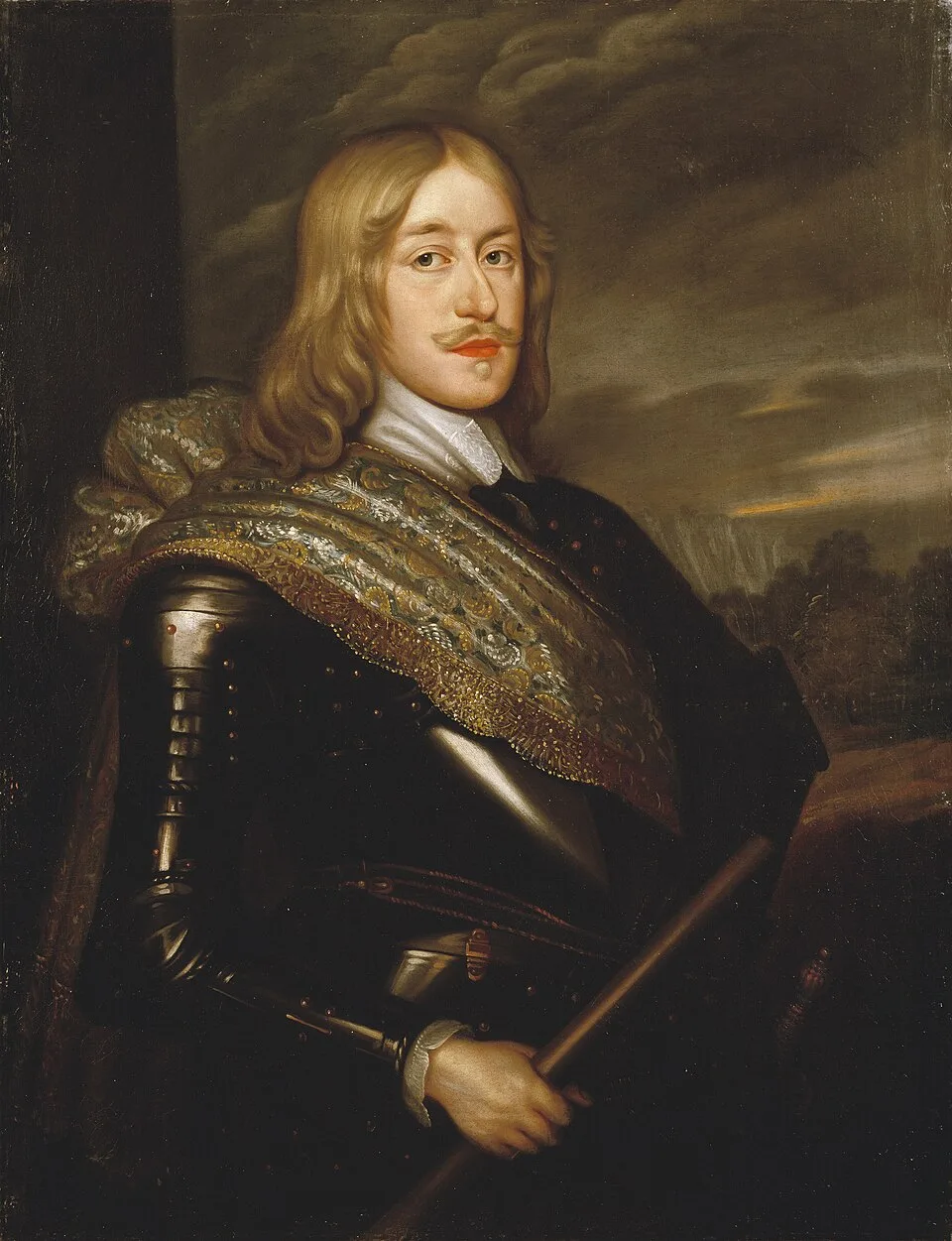
Painter: Hendrik Münnichhoven · 17th century · Nationalmuseum Stockholm / Wikimedia Commons · Public domain
Before the Deluge
Magnus Gabriel de la Gardie (1622–1686) was among the leading Swedish politicians of his generation. Educated at Uppsala and Leiden, he served as envoy to France, member of the royal council and governor of Livonia. This senior Baltic role explains why negotiations with Lithuanian magnates passed through him1.
The Lithuanian agreements
In summer 1655 de la Gardie commanded Swedish forces around the eastern Baltic. He received a declaration of submission from envoys of Janusz and Bogusław Radziwiłł and concluded an agreement on 10 August. This was a stage in the talks before the later Kėdainiai acts: the August declaration and the October agreement severing Lithuania's bond with the Crown were different documents21.
He was appointed governor over Samogitia and part of Lithuania in January 1656. Russian intervention and shifting allegiances made Swedish control contested rather than secure1.
From war to peace
De la Gardie became Sweden's principal envoy to the negotiations leading to the Peace of Oliva. He received successive mandates for talks with the Commonwealth and other powers. In 1660 he became chancellor of Sweden. His career connects the expansion of Swedish influence in Lithuania with the diplomacy that ended the war1.
Novel and film
For readers of Sienkiewicz, the Lithuanian agreements matter especially through the Radziwiłł story. De la Gardie's biography, however, comes from historical sources rather than the novel's plot. No distinct role for him has been verified in Hoffman's film cast34.
Notes
- Svenskt biografiskt lexikon, Magnus Gabriel De la Gardie, Svenskt biografiskt lexikon, Stockholm: Riksarkivet
- Ludwik Kubala, Wojny duńskie i pokój oliwski 1657–1660, Szkice historyczne, serja VI (Biblioteka Historyczna Altenberga), Lwów: Księgarnia Wydawnicza H. Altenberga, 1922, pp. 274–275
- Henryk Sienkiewicz, Potop, Fundacja Nowoczesna Polska (Wolne Lektury), 2009–2010
- Potop, Łódź: Państwowa Wyższa Szkoła Filmowa, Telewizyjna i Teatralna im. Leona Schillera w Łodzi (filmpolski.pl)
Explore further
Related
Related
- Capitulation of Kėdainiai (1655) Documented
Sources for this page
- Svenskt biografiskt lexikon, Magnus Gabriel De la Gardie, Svenskt biografiskt lexikon, Stockholm: Riksarkivet (Academic study)
- Ludwik Kubala, Wojny duńskie i pokój oliwski 1657–1660, Szkice historyczne, serja VI (Biblioteka Historyczna Altenberga), Lwów: Księgarnia Wydawnicza H. Altenberga, 1922 (Academic study)
- Henryk Sienkiewicz, Potop, Fundacja Nowoczesna Polska (Wolne Lektury), 2009–2010 (Primary source)
- Potop, Łódź: Państwowa Wyższa Szkoła Filmowa, Telewizyjna i Teatralna im. Leona Schillera w Łodzi (filmpolski.pl) (Reference work)