
AI illustration
Imagined scene inspired by the biography and portrait shown below.
Commander
Louis Raduit de Souches
Historical figureFrench-born imperial general who defended Brno against Sweden and later helped retake Toruń.
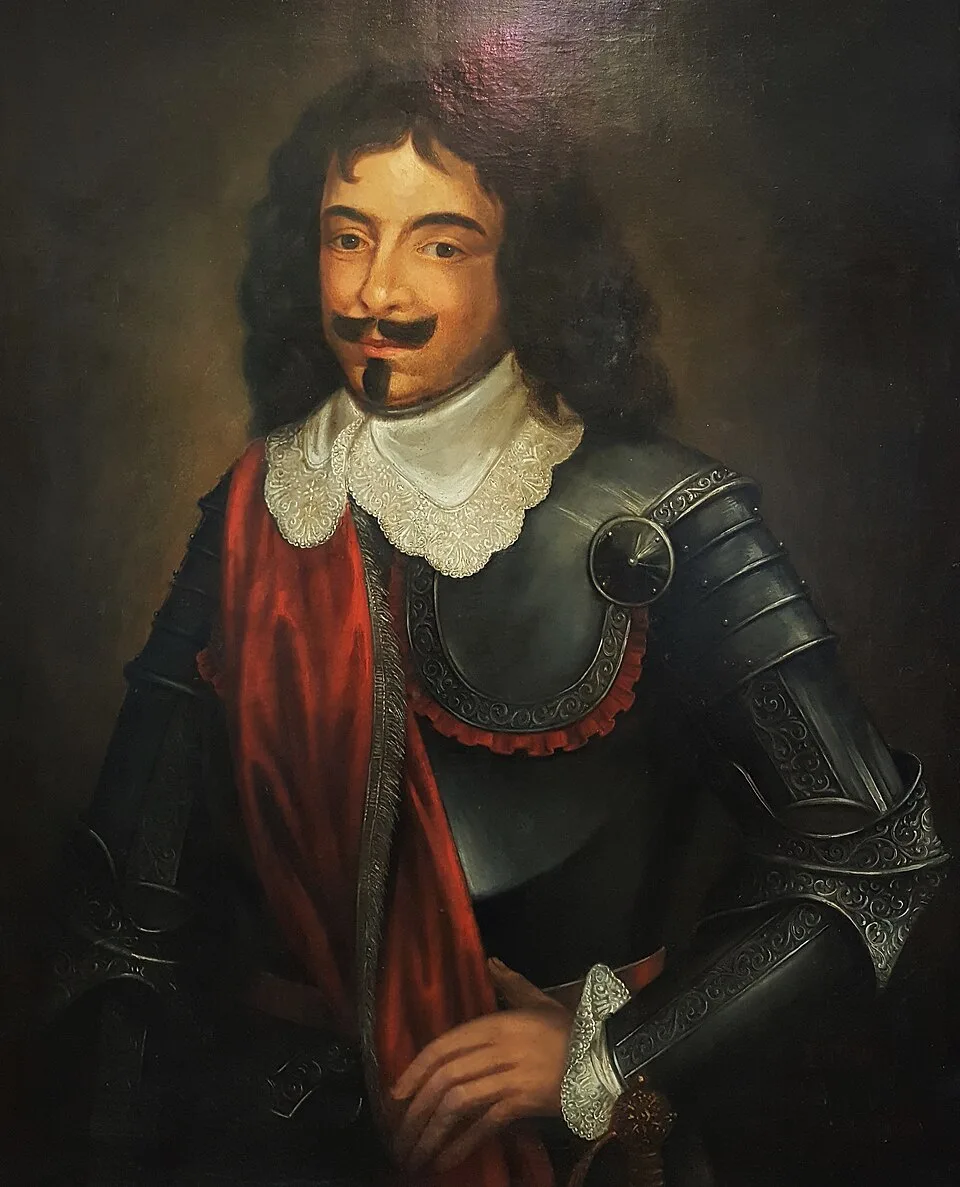
Painter: unknown · 17th century · Muzeum města Brna – Špilberk / Wikimedia Commons · Public domain
From La Rochelle to imperial service
Jean-Louis Raduit de Souches (1608–1682) was born into a Huguenot family in La Rochelle. He became a professional soldier and built his career in Habsburg service. His best-known achievement before the Deluge was commanding Brno's defence against Lennart Torstensson's Swedish army in 1645. The city still commemorates him. That campaign gave him extensive experience in fortress warfare12.
Toruń in 1658
De Souches commanded imperial troops outside Swedish-held Toruń in 1658. Together with Polish forces under Krzysztof Grodzicki, they established a blockade and then besieged the fortified city, supported by Jerzy Sebastian Lubomirski's army. The surrender late in 1658 weakened Sweden's hold in Royal Prussia. It was a joint operation by allied forces rather than the feat of a single commander34.
The officer who had defended Brno against Sweden thus later helped the Commonwealth retake Toruń. His career is a reminder that the Deluge was a wider European war with changing coalitions13.
Novel and film
The coalition war forms part of the background to Sienkiewicz's The Deluge. De Souches's specialist work at Toruń is not a central thread of the novel or Hoffman's film, and no distinct role has been verified in its cast56.
Notes
- Den Brna znovu připomene odvahu obránců města z roku 1645, Statutární město Brno
- Jean Louis Raduit de Souches, Raduit de Souches Heritage Project
- Blokada szwedzkiej załogi Torunia, Oś czasu, Warszawa: Muzeum Wojska Polskiego w Warszawie
- Kapitulacja szwedzkiej załogi Torunia, Oś czasu, Warszawa: Muzeum Wojska Polskiego w Warszawie
- Henryk Sienkiewicz, Potop, Fundacja Nowoczesna Polska (Wolne Lektury), 2009–2010
- Potop (1974), Filmoteka Narodowa – Instytut Audiowizualny
Explore further
Related
Related
- Blockade of the Swedish garrison in Toruń Documented
Sources for this page
- Den Brna znovu připomene odvahu obránců města z roku 1645, Statutární město Brno (Institution)
- Jean Louis Raduit de Souches, Raduit de Souches Heritage Project (Institution)
- Blokada szwedzkiej załogi Torunia, Oś czasu, Warszawa: Muzeum Wojska Polskiego w Warszawie (Institution)
- Kapitulacja szwedzkiej załogi Torunia, Oś czasu, Warszawa: Muzeum Wojska Polskiego w Warszawie (Institution)
- Henryk Sienkiewicz, Potop, Fundacja Nowoczesna Polska (Wolne Lektury), 2009–2010 (Primary source)
- Potop (1974), Filmoteka Narodowa – Instytut Audiowizualny (Institution)