
AI illustration
Imagined scene inspired by a portrait in the National Museum in Warsaw.
Commander
Stanisław Koniecpolski
b. c. 1594, d. 11 III 1646
Historical figureCrown grand hetman who fought Sweden in 1626–1629 and father of Aleksander. He died nine years before the Deluge.
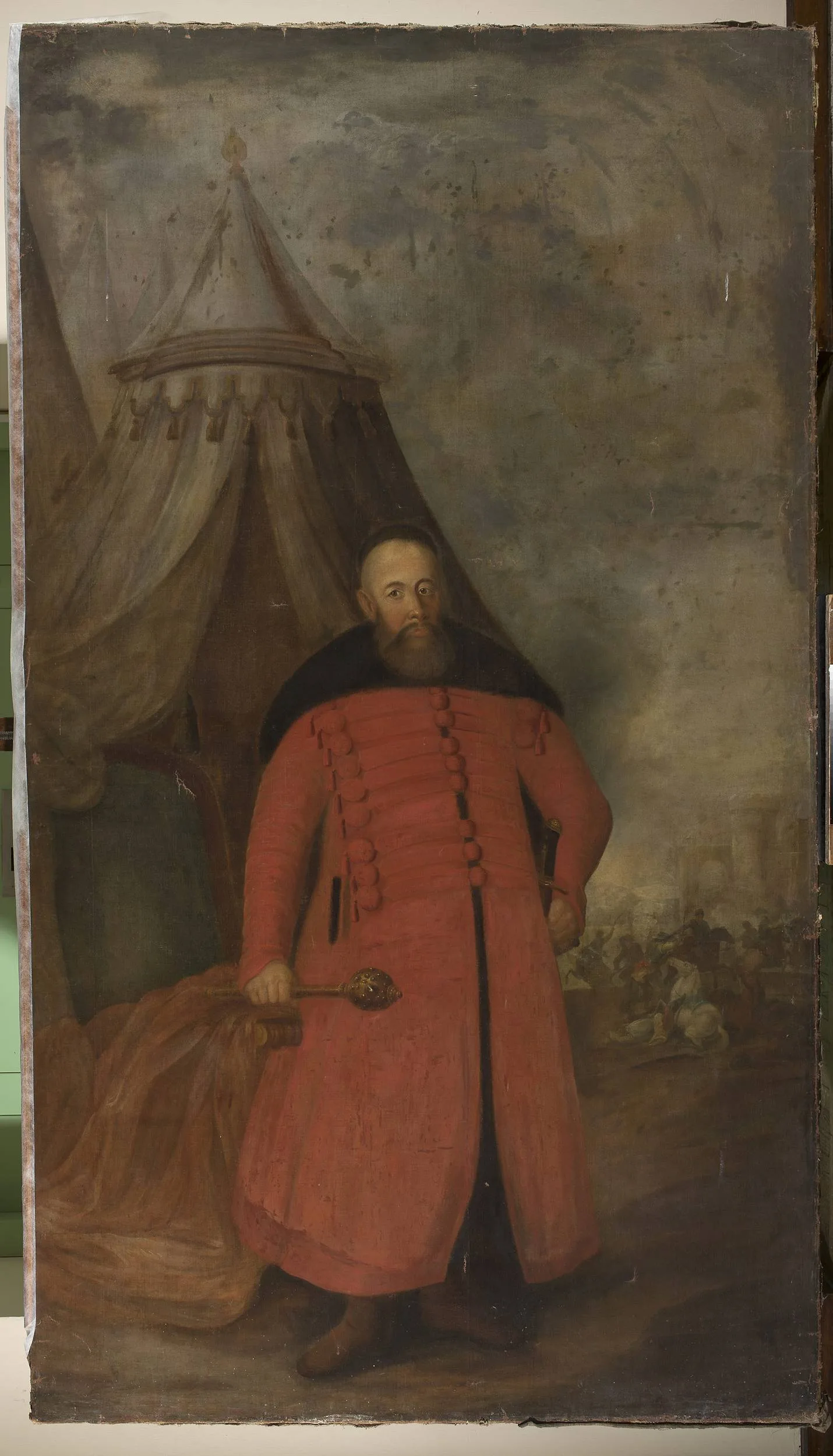
Painter: unknown · c. 1640 · Muzeum Narodowe w Warszawie / Wikimedia Commons · Public domain
A hetman before the Deluge
Stanisław Koniecpolski (born about 1594, died 1646) did not fight in the Deluge: he died nine years before Charles X Gustav invaded. He matters as a commander of the earlier war with Sweden and as the father of Aleksander Koniecpolski, who led cavalry at Wojnicz in 1655. Father and son had distinct careers12.
From captivity to high command
Stanisław served under Stanisław Żółkiewski and became Crown field hetman in 1618. After the defeat at Cecora in 1620 he was held captive by the Ottomans, returning in 1623. At Martynów the following year he defeated Tatar forces and freed many captives. In 1632 he became Crown grand hetman, the highest commander of the Crown army1.
The Swedish war before the Deluge
From 1626 to 1629 Koniecpolski commanded in Royal Prussia against Gustavus Adolphus. He retook Puck, forced Swedish troops to surrender at Hamersztyn and fought at Tczew. At Trzciana in 1629 his cavalry, supported by allied imperial troops, defeated part of the Swedish army. This battle preceded the Deluge by more than a quarter of a century and took place under Sigismund III Vasa1.
Koniecpolski argued for more infantry, fortifications and a fleet, while repeatedly facing shortages of money and unpaid soldiers. In 1635 he prepared Prussia for another war, but the truce with Sweden was extended at Stuhmsdorf. The invasion of 1655 came after his death1.
The eastern frontier and the cost of his reputation
In 1633 he checked an Ottoman force near Kamianets-Podilskyi; in 1644 he defeated Tatars at Okhmativ. Yet his campaigns against Cossacks were severe. Historian Władysław Czapliński describes a magnate defending the existing social order through force on the frontier. This is part of the background to the Khmelnytsky Uprising, which began after his death and weakened the Commonwealth before Sweden invaded1.
Less familiar traces
The hetman fortified Brody and built a residence at Pidhirtsi. In 1643 he arranged a silk manufactory there, recruiting craftsmen from several countries and planning long apprenticeships for local students. Although a devout Catholic, he also maintained contact with religious dissenters. He died at Brody on 11 March 1646. His son Aleksander inherited some of his offices and estates, but made his decisions during the Deluge after his father's death1.
Novel and film
Koniecpolski could not appear as a living commander in the events of The Deluge. His relevance is historical context, especially the earlier Swedish war and his son's biography. Events in the novel or film set in 1655–1660 should not be attributed to him134.
Notes
- Władysław Czapliński, Koniecpolski Stanisław h. Pobóg (ok. 1594–1646), Polski słownik biograficzny, t. XIII, Instytut Historii PAN, 1967–1968
- Aleksander Koniecpolski h. Pobóg (1620–1659), Polski Słownik Biograficzny / Instytut Historii PAN
- Henryk Sienkiewicz, Potop, Fundacja Nowoczesna Polska (Wolne Lektury), 2009–2010
- Potop, Łódź: Państwowa Wyższa Szkoła Filmowa, Telewizyjna i Teatralna im. Leona Schillera w Łodzi (filmpolski.pl)
Explore further
History
Related
Related
- Aleksander Koniecpolski Historical figure
- Why did Sweden invade? Documented
- Aleksander Koniecpolski Historical figure
Sources for this page
- Władysław Czapliński, Koniecpolski Stanisław h. Pobóg (ok. 1594–1646), Polski słownik biograficzny, t. XIII, Instytut Historii PAN, 1967–1968 (Institution)
- Aleksander Koniecpolski h. Pobóg (1620–1659), Polski Słownik Biograficzny / Instytut Historii PAN (Institution)
- Henryk Sienkiewicz, Potop, Fundacja Nowoczesna Polska (Wolne Lektury), 2009–2010 (Primary source)
- Potop, Łódź: Państwowa Wyższa Szkoła Filmowa, Telewizyjna i Teatralna im. Leona Schillera w Łodzi (filmpolski.pl) (Reference work)