
AI illustration
Imagined scene inspired by the biography and portrait shown below.
Foreign leader
Fryderyk Wilhelm
Historical figureElector of Brandenburg and Duke of Prussia whose change of allegiance secured sovereignty in Ducal Prussia.
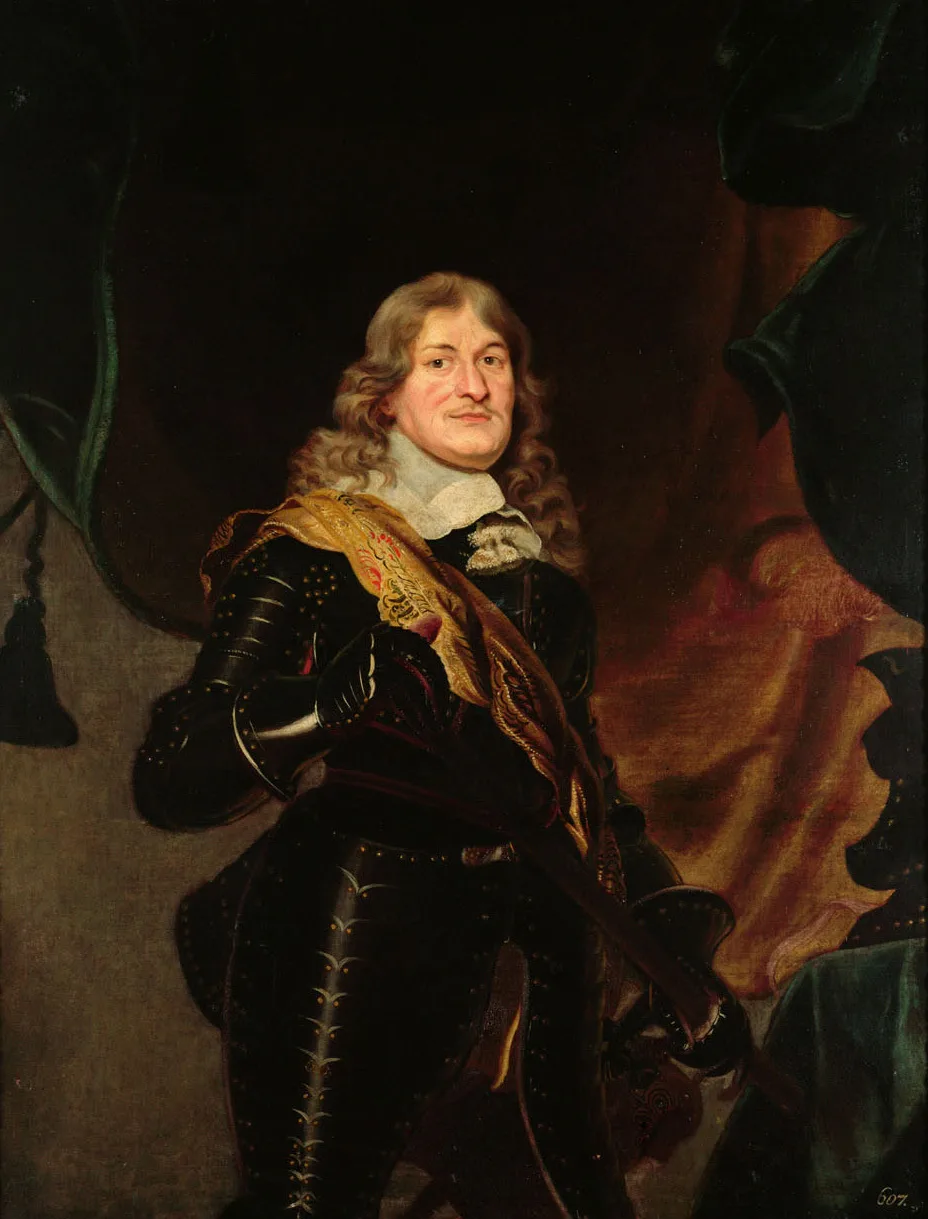
Painter: Frans Luycx · c. 1650–1651 · Kunsthistorisches Museum Wien / Wikimedia Commons · Public domain
The elector and his fragmented state
Frederick William (1620–1688), later called the Great Elector, inherited Brandenburg and Prussia in 1640 during the Thirty Years' War. His scattered territories had been badly damaged. Ducal Prussia remained a fief of the Polish Crown even though he ruled it personally. That legal position explains his overriding interest in securing sovereignty there during the Deluge12.
During the Deluge
In 1656 the elector allied with Sweden. The Malbork treaty promised him territory in the Commonwealth in return for military help. His representatives also joined the partition plan agreed at Radnot34.
In 1657 he left the Swedish alliance. In the Wehlau–Bromberg agreements John II Casimir recognised his sovereignty in Ducal Prussia, formerly a fief of the Polish crown. This was a lasting consequence of the war2.
His troops had fought with Sweden in the three-day Battle of Warsaw in 1656. Soon afterwards he negotiated a change of alliance. The Treaty of Wehlau in September 1657, confirmed at Bromberg, brought him a major prize that the later Peace of Oliwa did not reverse: the end of Polish feudal suzerainty over Ducal Prussia. It was one of the Deluge's longest-lasting political consequences562.
After the war
Frederick William strengthened the army and electoral authority, becoming a major architect of Brandenburg–Prussia's power. His choices show that the conflict in the Commonwealth also reshaped politics around the southern Baltic1.
Novel and film
Sienkiewicz and Hoffman focus on the Swedish occupation and Kmicic. The elector belongs chiefly to the diplomatic and military background; the film's credited cast does not establish a separate role for him78.
Notes
- Friedrich Wilhelm, Kurfürst von Brandenburg, Deutsche Biographie / Bayerische Staatsbibliothek
- Układy welawsko-bydgoskie, Oś czasu, Warszawa: Muzeum Wojska Polskiego w Warszawie
- Traktat malborski, Oś czasu, Warszawa: Muzeum Wojska Polskiego w Warszawie
- Traktat w Radnot, Oś czasu, Warszawa: Muzeum Wojska Polskiego w Warszawie
- Der Große Kurfürst wird souveräner Herzog, Deutschlandmuseum
- Trzydniowa bitwa pod Warszawą, Oś czasu, Warszawa: Muzeum Wojska Polskiego w Warszawie
- Henryk Sienkiewicz, Potop, Fundacja Nowoczesna Polska (Wolne Lektury), 2009–2010
- Potop, Łódź: Państwowa Wyższa Szkoła Filmowa, Telewizyjna i Teatralna im. Leona Schillera w Łodzi (filmpolski.pl)
Explore further
Related
Related
- Treaties of Wehlau and Bromberg Documented
- Bydgoszcz
Sources for this page
- Friedrich Wilhelm, Kurfürst von Brandenburg, Deutsche Biographie / Bayerische Staatsbibliothek (Institution)
- Układy welawsko-bydgoskie, Oś czasu, Warszawa: Muzeum Wojska Polskiego w Warszawie (Institution)
- Traktat malborski, Oś czasu, Warszawa: Muzeum Wojska Polskiego w Warszawie (Institution)
- Traktat w Radnot, Oś czasu, Warszawa: Muzeum Wojska Polskiego w Warszawie (Institution)
- Der Große Kurfürst wird souveräner Herzog, Deutschlandmuseum (Institution)
- Trzydniowa bitwa pod Warszawą, Oś czasu, Warszawa: Muzeum Wojska Polskiego w Warszawie (Institution)
- Henryk Sienkiewicz, Potop, Fundacja Nowoczesna Polska (Wolne Lektury), 2009–2010 (Primary source)
- Potop, Łódź: Państwowa Wyższa Szkoła Filmowa, Telewizyjna i Teatralna im. Leona Schillera w Łodzi (filmpolski.pl) (Reference work)