
AI illustration
Imagined scene inspired by the biography and portrait shown below.
Foreign leader
Jerzy II Rakoczy
Historical figurePrince of Transylvania whose invasion followed the Radnot partition plan and ended in capitulation in 1657.
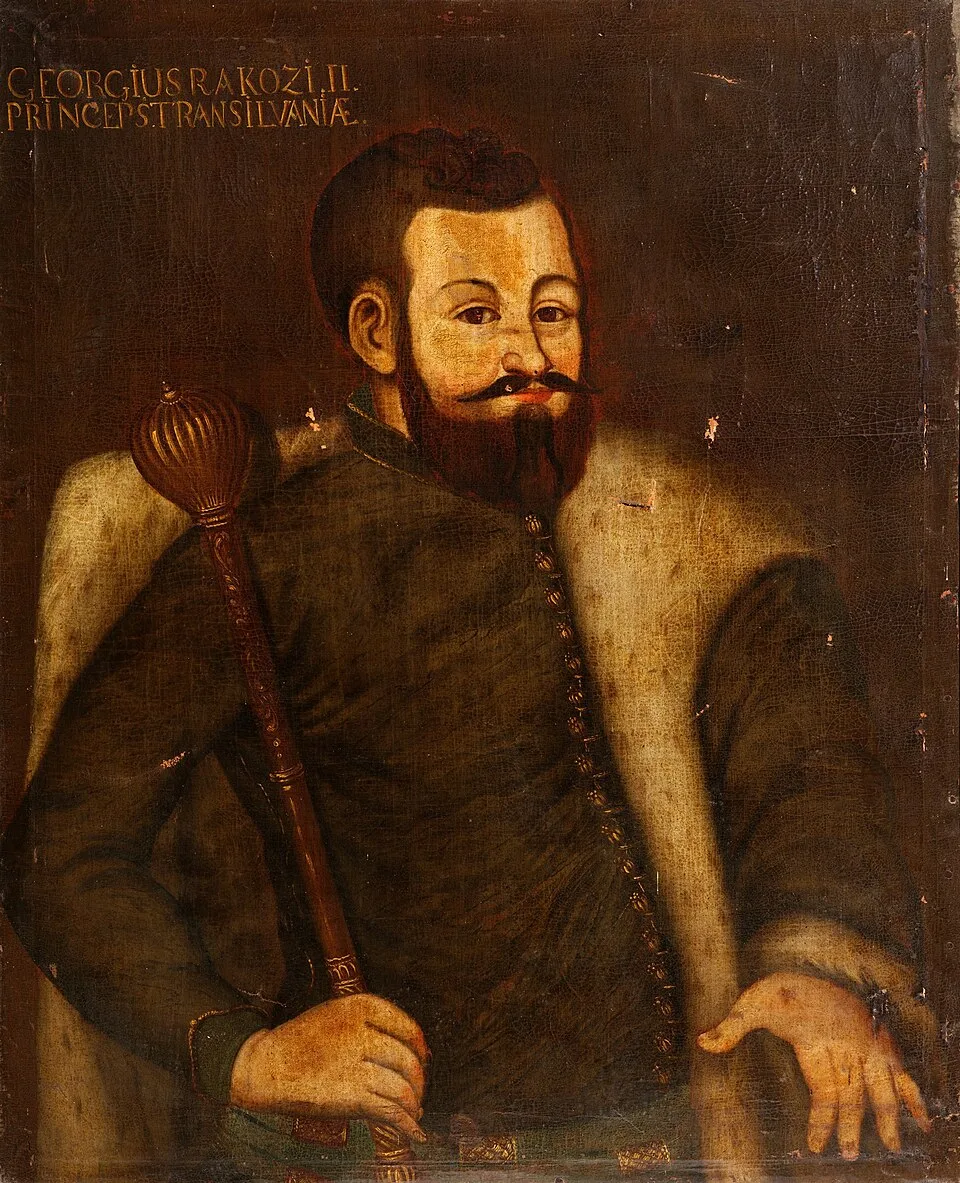
Painter: unknown · 17th century · Batthyaneum Library / Wikimedia Commons · Public domain
Prince of Transylvania
George II Rákóczi (1621–1660) ruled Transylvania from 1648. His principality stood between Habsburg and Ottoman influence, and he sought a place in the wider northern war. The Swedish alliance promised him the Polish crown, but the expedition also defied Ottoman interests and would later rebound against him12.
During the Deluge
In 1656 Transylvania joined the Radnot agreement, which proposed giving Rákóczi a large part of the Commonwealth and its crown. The treaty recorded the allies’ intentions, not borders they actually established1.
In 1657 his army invaded the Commonwealth. After defeats he negotiated with Polish commanders and capitulated, undertaking among other things to break with Sweden and pay compensation3.
The invasion was not solely Transylvanian: Moldavian, Wallachian and Cossack troops also joined. Rákóczi's forces and the Swedes took Warsaw in June 1657. When Charles X Gustav turned toward Denmark, the prince withdrew south. Despite his agreement with the Polish commanders, Tatars attacked his retreating army and took thousands prisoner. Rákóczi escaped, but his bid for the Polish crown collapsed45.
The cost of failure
His authority in Transylvania was challenged after 1657, and Ottoman intervention deepened the principality's crisis. Rákóczi died in 1660. The proposed partition at Radnot thus had consequences even for one of its sponsors2.
Novel and film
In the third volume of The Deluge, Sienkiewicz treats news of the Swedish alliance with Rákóczi as the threat of another deluge, while also mentioning negotiations about the succession. The prince is an emblem of danger in the novel rather than a subject of full biography. Hoffman's credited cast does not establish a separate Rákóczi role67.
Notes
- Traktat w Radnot, Oś czasu, Warszawa: Muzeum Wojska Polskiego w Warszawie
- II. Rákóczi György i wydarzenia w Siedmiogrodzie po 1657 roku, Magyar Nemzeti Levéltár
- Kapitulacja Jerzego II Rakoczego, Oś czasu, Warszawa: Muzeum Wojska Polskiego w Warszawie
- Kapitulacja Jerzego II Rakoczego, Muzeum Historii Polski
- Warszawa kapituluje przed Siedmiogrodzianami i Szwedami, Oś czasu, Warszawa: Muzeum Wojska Polskiego w Warszawie
- Henryk Sienkiewicz, Potop, Fundacja Nowoczesna Polska (Wolne Lektury), 2009–2010
- Potop, Łódź: Państwowa Wyższa Szkoła Filmowa, Telewizyjna i Teatralna im. Leona Schillera w Łodzi (filmpolski.pl)
Explore further
Related
Related
- George II Rákóczi capitulates Documented
Sources for this page
- Traktat w Radnot, Oś czasu, Warszawa: Muzeum Wojska Polskiego w Warszawie (Institution)
- II. Rákóczi György i wydarzenia w Siedmiogrodzie po 1657 roku, Magyar Nemzeti Levéltár (Institution)
- Kapitulacja Jerzego II Rakoczego, Oś czasu, Warszawa: Muzeum Wojska Polskiego w Warszawie (Institution)
- Kapitulacja Jerzego II Rakoczego, Muzeum Historii Polski (Institution)
- Warszawa kapituluje przed Siedmiogrodzianami i Szwedami, Oś czasu, Warszawa: Muzeum Wojska Polskiego w Warszawie (Institution)
- Henryk Sienkiewicz, Potop, Fundacja Nowoczesna Polska (Wolne Lektury), 2009–2010 (Primary source)
- Potop, Łódź: Państwowa Wyższa Szkoła Filmowa, Telewizyjna i Teatralna im. Leona Schillera w Łodzi (filmpolski.pl) (Reference work)