
AI illustration
Imagined scene inspired by the biography and portrait shown below.
Chronicler
Jan Chryzostom Pasek
Historical figureA soldier under Czarniecki and author of the Memoirs, among the liveliest witnesses to the Deluge era.
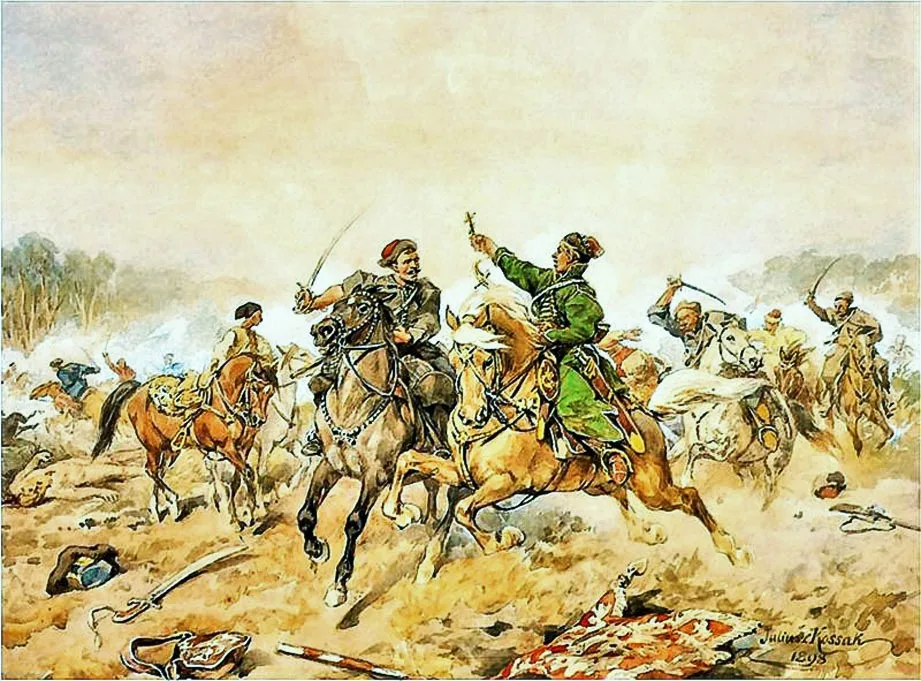
Painter: Juliusz Kossak · 19th century · Wikimedia Commons · Public domain
A cavalryman's life
Jan Chryzostom Pasek was probably born around 1636 into an impoverished noble family at Gosławice. He attended a Jesuit college in Rawa and joined the army around 1655. He served in Stefan Czarniecki's division, in Stanisław Widlica Domaszewski's armoured cavalry company, throughout his military career. His account offers a rare view from an ordinary noble cavalryman rather than a king or hetman1.
The Deluge and Denmark
He fought the Swedes and accompanied Czarniecki's expedition to Denmark. His account of the 1658 crossing to the island of Als is especially vivid. A fellow participant, Jakub Łoś, also recorded boats and rafts. Reading the two together reveals the logistics behind the memorable story. Pasek later joined campaigns against Russia and other Commonwealth conflicts12.
The man behind the Memoirs
He left the army in 1667, married the widow Anna Łącka and became a farmer and leaseholder. Grain trading, local assemblies and many lawsuits filled the rest of his life. Court records reveal a more quarrelsome man than the memoirist's self-portrait. The Polish Biographical Dictionary even records a tame otter he later gave to King John III Sobieski1.
He wrote his memoirs long after the campaigns. They survive in an incomplete copy, without beginning or end. His memory, storytelling gifts and wish to shape his own story make them compelling but not an exact battlefield transcript. Comparing him with other witnesses matters1.
Novel and film
Pasek is not a central character in Sienkiewicz's The Deluge. His memoirs did, however, help shape later understandings of seventeenth-century noble speech and manners that inform the world of the Trilogy. Hoffman's film has no verified separate Pasek role: his link to it is mainly as a witness to the period345.
When the memoirs were written
Ossolineum’s author note places the writing of Pasek’s memoirs in the last decade of the seventeenth century, after his military service. The first complete edition appeared in 1836, after his death. This interval matters when reading the account: it is a later recollection, rather than a diary kept during the campaigns6.
Notes
- Jan Chryzostom Pasek (ok. 1636–1701), Polski Słownik Biograficzny / Instytut Historii PAN
- Przeprawa na wyspę Als, Oś czasu, Warszawa: Muzeum Wojska Polskiego w Warszawie
- Polski mit sarmaty. Pamiętniki Jana Chryzostoma Paska, Warszawa: Zintegrowana Platforma Edukacyjna
- Henryk Sienkiewicz, Potop, Fundacja Nowoczesna Polska (Wolne Lektury), 2009–2010
- Potop, Łódź: Państwowa Wyższa Szkoła Filmowa, Telewizyjna i Teatralna im. Leona Schillera w Łodzi (filmpolski.pl)
- Jan Chryzostom Pasek, Warszawa: Wydawnictwo Ossolineum
Explore further
Related
Related
- Crossing to the island of Als Documented
Sources for this page
- Jan Chryzostom Pasek (ok. 1636–1701), Polski Słownik Biograficzny / Instytut Historii PAN (Institution)
- Przeprawa na wyspę Als, Oś czasu, Warszawa: Muzeum Wojska Polskiego w Warszawie (Institution)
- Polski mit sarmaty. Pamiętniki Jana Chryzostoma Paska, Warszawa: Zintegrowana Platforma Edukacyjna (Institution)
- Henryk Sienkiewicz, Potop, Fundacja Nowoczesna Polska (Wolne Lektury), 2009–2010 (Primary source)
- Potop, Łódź: Państwowa Wyższa Szkoła Filmowa, Telewizyjna i Teatralna im. Leona Schillera w Łodzi (filmpolski.pl) (Reference work)
- Jan Chryzostom Pasek, Warszawa: Wydawnictwo Ossolineum (Institution)